

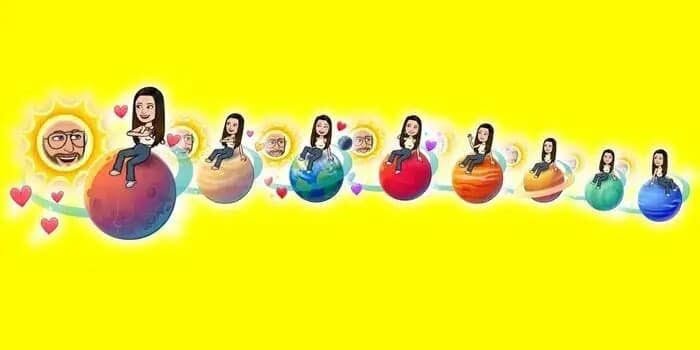
Have you ever opened Snapchat, checked your Friend Solar System, and suddenly noticed that someone was your Venus, Earth, or Mercury? If so, you’re not alone. Thousands of Snapchat users discover these planet rankings every day and immediately start wondering what they mean.
The feature has created curiosity, excitement, and sometimes even confusion. Some users treat it as a fun way to see who they interact with most, while others take the rankings very seriously and use them as a measure of friendship. That difference in perception is exactly why this topic has become so popular.
The idea behind Snap planets is simple on the surface, but there are a few important details worth understanding before drawing conclusions from what you see in the app.
Quick Answer
Snapchat’s Friend Solar System is a Snapchat+ feature that ranks your closest friends using planets. Each planet represents a position in your interaction list. Mercury represents your closest friend, while Neptune represents a lower position among your top friends. The system is based on engagement patterns such as snaps, chats, and overall interaction frequency.
What Is Snap Planets?
The Friend Solar System is a premium Snapchat+ feature designed to visualize friendships. Instead of showing a plain numbered ranking, Snapchat uses planets from our solar system.
In this system:
- You are represented as the Sun.
- Your closest friends are represented as planets.
- Each planet corresponds to a specific friendship ranking.
- The closer the planet is to the Sun, the stronger your interaction level.
For example:
- Mercury = #1 closest friend
- Venus = #2
- Earth = #3
- Mars = #4
- Jupiter = #5
- Saturn = #6
- Uranus = #7
- Neptune = #8
This approach makes friendship rankings feel more interactive and visually engaging.
How Does the Friend Solar System Work?
Snapchat has never publicly revealed its exact algorithm. However, based on user observations and Snapchat’s explanations, rankings appear to be influenced by several factors.
Interaction Frequency
The number of snaps exchanged plays a major role.
Users who regularly send and receive snaps tend to rank higher.
Chat Activity
Text conversations may also contribute to relationship rankings.
Consistent communication often strengthens placement within the system.
Mutual Engagement
The feature appears to value two-way interaction rather than one-sided activity.
Someone who frequently responds to your messages is more likely to rank higher than someone who rarely interacts.
Recent Activity
Recent communication seems to carry significant weight.
A friend you interacted with heavily last month but barely talk to now may eventually move down in the rankings.
Planet Rankings Explained
Mercury
Mercury represents your closest Snapchat friend.
This person is typically someone with whom you exchange snaps and messages constantly.
Venus
Venus indicates the second-closest friend.
Communication is still very frequent, but slightly lower than your Mercury friend.
Earth
Earth represents the third position.
Many users find themselves checking this ranking frequently because it often includes close friends, classmates, or family members.
Mars Through Neptune
The remaining planets represent progressively lower positions within your top eight friends.
Being Neptune doesn’t mean someone is unimportant. It simply means there are other users with whom you interact more frequently.
Main Features
The Friend Solar System offers several unique features.
Visual Friendship Ranking
Instead of numbers, users receive planet-based rankings.
Exclusive Snapchat+ Access
The feature is available only through Snapchat’s subscription service.
Personalized Friend Insights
Users gain a quick overview of their most active connections.
Interactive Design
The solar-system concept feels more engaging than a traditional leaderboard.
Benefits of Using It
Makes Snapchat More Fun
Gamification keeps many users engaged.
Checking friendship rankings can be entertaining and creates additional reasons to interact with friends.
Encourages Communication
Some users become more active after noticing changes in rankings.
Easy to Understand
Most people quickly understand that closer planets indicate stronger interaction levels.
Creates Conversation
Friends often compare rankings and discuss their positions.
Drawbacks and Criticisms
While the feature is fun, it isn’t perfect.
Can Create Unnecessary Anxiety
Some users become overly focused on rankings.
Seeing a close friend move from Venus to Jupiter can trigger unnecessary concerns.
Doesn’t Measure Real Friendship
Digital interactions don’t always reflect real-world relationships.
You might talk daily with a coworker on Snapchat but rarely meet in person, while your best friend may use a different messaging app.
Algorithm Transparency Is Limited
Snapchat does not fully explain how rankings are calculated.
As a result, users often make assumptions that may not be accurate.
Subscription Requirement
The feature requires Snapchat+.
Users unwilling to pay for premium features cannot access it.
Real-World Examples
Example 1: Long-Distance Friends
Two friends living in different countries exchange snaps throughout the day.
Because of frequent communication, they may appear as Mercury and Venus even if they rarely meet physically.
Example 2: School Friends
Students who constantly share photos, updates, and chats often rank highly within each other’s solar systems.
Example 3: Family Members
Siblings who communicate regularly through Snapchat may appear among top planetary positions despite living in separate cities.
Safety and Privacy Analysis
A common concern involves privacy.
Fortunately, the feature does not publicly reveal your entire friendship ranking to everyone.
However, there are still considerations.
What Others Can See
Visibility depends on Snapchat+ settings and mutual friendship status.
Emotional Privacy
The bigger concern may be emotional rather than technical.
Some users place too much importance on rankings and become stressed when positions change.
Data Collection
Like most social platforms, Snapchat uses interaction data to personalize experiences.
Users should review privacy settings periodically.
Is It Legitimate?
Yes.
The Friend Solar System is an official Snapchat feature available through Snapchat+.
It is not a third-party application, scam, or unofficial modification.
However, users should be cautious of external websites claiming to reveal hidden friendship rankings or provide special access. Many of these services are unreliable and could pose security risks.
Common Problems Users Experience
Planet Ranking Suddenly Changes
This usually occurs because interaction patterns changed over time.
Friend Is Missing From Top Planets
They may not currently rank among your most interacted-with contacts.
Confusion About Mutual Rankings
Someone can be your Mercury while you are not theirs.
Interaction levels are calculated individually.
Overthinking the Results
This is perhaps the most common issue.
Many users assume rankings represent emotional closeness when they actually represent app activity.
Comparison With Alternatives
Instagram Close Friends
Instagram’s Close Friends feature allows manual selection.
Snapchat rankings are generated automatically.
Facebook Friend Lists
Facebook offers organizational tools but lacks gamified friendship rankings.
Discord Interaction Patterns
Discord communities often reveal active relationships naturally through participation rather than explicit ranking systems.
Expert-Style Practical Opinion
After observing how users interact with this feature, one thing becomes clear: it works best when viewed as entertainment rather than a serious friendship measurement.
The ranking system does a decent job identifying frequent interactions. What it cannot accurately measure is trust, loyalty, emotional support, or the depth of a relationship.
A close friend who rarely uses Snapchat could rank lower than someone you casually exchange snaps with every day.
That’s why treating planetary positions as interesting insights—not relationship scorecards—is probably the healthiest approach.
Is It Actually Useful?
Yes, but within limits.
Useful for:
- Identifying your most active Snapchat connections
- Tracking communication habits
- Adding a fun social element
- Exploring Snapchat+ features
Less useful for:
- Measuring real friendship quality
- Determining emotional closeness
- Evaluating relationship importance
Final Verdict
The Snapchat Friend Solar System is a creative and entertaining feature that transforms friendship rankings into a visual experience. It offers an interesting glimpse into who you interact with most on the platform and adds extra engagement for Snapchat+ subscribers.
That said, users should remember that interaction frequency is not the same thing as friendship quality. The feature works well as a fun social tool, but it should not be treated as a definitive measure of relationships.
For most people, it’s an enjoyable bonus feature rather than something that should influence how they view their friendships.
Next More Blogs: Optonline
FAQs
Q: What does Mercury mean in Snapchat’s Friend Solar System?
A: Mercury represents your closest Snapchat friend based on interaction activity.
Q: Can someone see their planet in my solar system?
A: Depending on Snapchat+ visibility settings and mutual status, some friendship indicators may be visible.
Q: Does chatting affect planet rankings?
A: Interaction activity, including chats and snaps, appears to contribute to rankings.
Q: Are planet rankings updated automatically?
A: Yes. Rankings change as interaction patterns evolve over time.
Q: Is the feature available for free users?
A: No. The Friend Solar System is generally available through Snapchat+.
Q: Do planet rankings reflect real friendships?
A: Not necessarily. They primarily reflect activity within Snapchat rather than emotional closeness.
Q: Can rankings change quickly?
A: Yes. Increased or decreased interaction can influence positions over time.
Q: Is Snapchat Friend Solar System safe?
A: The feature itself is an official Snapchat tool and is generally considered safe to use
