

Type “repmold” into Google and you’ll notice something odd. A handful of articles describe it as a cutting-edge digital molding process. Others frame it as a mold-repair technique. One or two use it in completely unrelated contexts, like internet performance, which has nothing to do with manufacturing at all. If you came here confused about what this term actually means, you’re not imagining things — the coverage really is scattered.
This article pulls together what’s consistent across the more credible sources, flags what looks like filler or SEO noise, and gives you a grounded, no-nonsense answer to the question: what is repmold, and does it matter for you?
Quick Answer
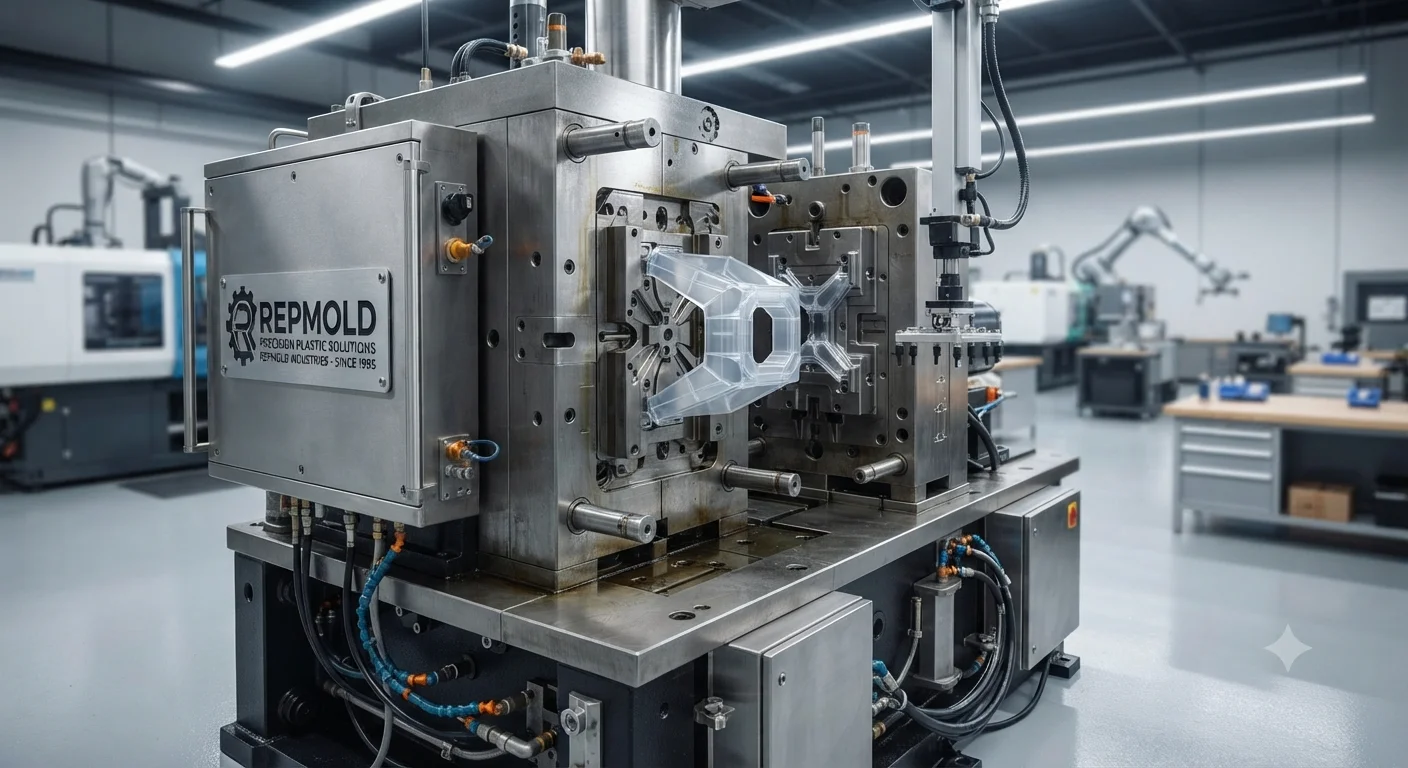
Repmold refers to a digital-first approach to mold making and mold repair that combines 3D scanning, CAD/CAM modeling, and rapid manufacturing methods like 3D printing or CNC machining. Instead of building a mold entirely by hand or replacing a damaged one from scratch, manufacturers scan the existing part or design, correct it digitally, and produce a new or repaired mold with much less lead time. It’s less a single branded product and more a description of a workflow that several manufacturing and prototyping companies have started using and marketing under this name.
If you were expecting a polished SaaS tool or a well-known company with a public track record, that’s where things get murkier — and we’ll get into that.
What Is “Repmold,” Really?
Here’s the honest picture. Repmold isn’t a term with one clear inventor, one company, or one industry standard behind it, the way “injection molding” or “CNC machining” are established, textbook-level concepts. It shows up mostly in blog-style content describing a process rather than a specific product you can sign up for or purchase directly.
Strip away the marketing language, and what’s left is a fairly sensible idea: use digital tools to speed up something that used to be slow and manual. Mold making, traditionally, means machining a cavity by hand or through conventional tooling, testing it, adjusting it, and repeating that cycle until it’s right. That process can take weeks. Repmold, as described across the sources that cover it, shortens that cycle by scanning a reference part or damaged mold, generating a corrected digital model, and manufacturing a new version using additive or precision subtractive methods.
Think of it less like a brand-new invention and more like a natural evolution of rapid prototyping — the same trend that gave manufacturers 3D-printed jigs, digital twins, and reverse-engineered replacement parts. Repmold sits at that intersection.
How It Works: The Actual Process
Based on how the concept is described in manufacturing-focused write-ups, a typical repmold workflow looks something like this:
- Inspection and scanning. A worn, damaged, or existing mold (or an original part) is scanned using 3D scanning equipment to capture its precise geometry.
- Digital correction. The scan data is converted into a CAD model, where engineers can fix defects, cracks, or wear patterns that wouldn’t be visible or fixable through manual repair.
- Rapid production. The corrected digital model is used to produce a new mold or replacement component, usually through 3D printing, CNC machining, or a combination of both.
- Testing and iteration. The new mold is tested against production requirements, with adjustments made digitally rather than through manual rework.
The appeal here is obvious if you’ve ever worked in a shop where a single cracked mold shut down a production line for days. Instead of starting over with raw material and a machinist’s schedule, you’re working from a digital reference that can be tweaked in software and sent straight to a machine.
Who Repmold Is Actually For
This isn’t a consumer tool, and it’s not something a hobbyist tinkering with a desktop 3D printer needs to worry about. Based on how the concept is applied, it’s aimed at:
- Manufacturing and tooling teams who need to repair or replicate molds without the downtime of building from scratch
- Product development and prototyping teams iterating on part designs where speed matters more than mass-production tooling
- Small-batch and custom manufacturers, including medical device and prosthetics makers, where every part may need slight customization
- Automotive and electronics suppliers dealing with frequent design revisions and tight production windows
If none of that applies to your work, the honest answer is that repmold probably isn’t relevant to you day-to-day, no matter how many “10 reasons you need repmold” articles show up in search results.
Main Features (As Described Across Sources)
- 3D scanning-based reverse engineering of existing or damaged molds
- CAD/CAM integration for digital correction and redesign
- Rapid prototyping compatibility, using 3D printing for quick test iterations
- CNC-based final production for durable, production-grade molds
- Reduced material waste, since digital correction avoids scrapping an entire mold over a fixable defect
Worth noting: none of these features are unique to a single named platform. They’re standard capabilities across the broader digital manufacturing and reverse-engineering space. What repmold seems to describe is the workflow of combining them for mold-specific use cases.
Pros and Cons
Potential benefits:
- Faster turnaround than traditional mold fabrication or repair
- Less material waste, since damaged molds can potentially be corrected instead of scrapped
- Easier to iterate on designs mid-production
- Useful for low-volume or highly customized parts, like medical devices
Drawbacks and limitations:
- The term itself lacks a clear, authoritative source — no dominant company, standards body, or well-documented case study seems to anchor it
- Initial investment in 3D scanning and CAD/CAM software isn’t cheap, especially for smaller shops
- Requires trained staff who can work across scanning, CAD, and machining — that’s not a small ask for a lot of manufacturers
- Digital replication has real limits with certain materials and mold geometries that don’t scan or print cleanly
- A lot of the online content about it reads like generic manufacturing filler rather than firsthand technical documentation, which makes it hard to verify specific performance claims (like exact percentage improvements in lead time)
Real-World Use Cases
Even without a single flagship company to point to, the underlying techniques repmold describes are genuinely used across industries:
- A prototyping shop with a cracked injection mold might scan it, fix the crack digitally, and 3D print a replacement cavity insert instead of waiting for a new mold to be machined from raw steel.
- A medical device manufacturer producing custom prosthetics could use scan-and-correct workflows to adjust molds for each patient without redesigning from zero every time.
- An automotive supplier iterating on a bracket design might use rapid digital remolding to test three or four variations in the time it used to take to machine one.
These scenarios aren’t hypothetical — they reflect how digital scanning and rapid tooling are genuinely applied in modern manufacturing. Whether a specific team calls that process “repmold” is more a matter of branding than substance.
Is Repmold Legitimate? A Safety and Legitimacy Check
This is where it’s worth being direct with you. If you searched for repmold expecting a product review — pricing, sign-up process, a company you can contact — you’ll come away disappointed. What exists online is mostly generalized explainer content, some of it clearly written to rank for the keyword rather than to document a real, verifiable service. A few pages even mix “repmold” into completely unrelated topics, like internet speed forums, which is a strong signal of low-quality content farming rather than a coherent product or brand.
That doesn’t mean the underlying manufacturing concept is fake. Digital mold scanning, CAD-based correction, and rapid tooling are real, well-established techniques used by legitimate manufacturing and prototyping companies. What’s shaky is the idea that “repmold” is a specific, unified product, platform, or company you can evaluate the way you’d evaluate, say, a piece of software. If a vendor pitches you something specifically branded “Repmold” and asks for payment or account signup, treat that the way you’d treat any unfamiliar B2B vendor: check for a verifiable business address, real client references, and a working, non-generic support channel before committing.
Common Problems and Limitations
- Vague sourcing. Much of what’s published about repmold reads similarly across different sites, which usually means it’s derived from the same handful of original sources rather than independent testing or reporting.
- No clear pricing or vendor information. Unlike an actual SaaS product or manufacturing service, there’s no consistent answer to “how much does it cost” or “who do I contact.”
- Overlap with existing terminology. Everything repmold describes already has names — reverse engineering, rapid tooling, additive-subtractive hybrid manufacturing. It’s fair to ask whether “repmold” adds a new capability or just repackages known techniques under a catchier label.
How It Compares to Established Alternatives
| Approach | Speed | Cost | Best For |
|---|---|---|---|
| Traditional mold machining | Slow (weeks) | High upfront tooling cost | Large-scale, fixed-design production |
| 3D scanning + CAD correction (what “repmold” describes) | Fast (days) | Moderate, requires scanning/CAD investment | Repairs, small batches, frequent design changes |
| Pure additive manufacturing (3D-printed molds) | Fastest | Low for prototypes, limited durability | Short-run prototypes, low-stress applications |
| CNC-only rapid tooling | Moderate | Moderate to high | Durable molds needing precision without full retooling |
If your team already has scanning and CAD capability, the repmold-style workflow is essentially something you can implement without waiting for a specific vendor. If you don’t, the investment needed to get there is the real barrier, not the concept itself.
A Practical, Experience-Based Opinion
Having spent time around both traditional tooling shops and teams that lean heavily digital, my honest take is this: the workflow behind repmold is sound and genuinely useful, but the term itself feels like it’s being pushed harder by content marketers than by actual manufacturers. That’s a pattern worth recognizing — plenty of legitimate engineering concepts get repackaged with a fresh name once someone realizes there’s search traffic to capture.
If you’re a production manager evaluating whether to invest in scan-based mold repair and rapid tooling, evaluate it on the merits of the actual technology — the scanner accuracy, the CAD software, the machine capability — rather than searching for a single company or tool named “repmold.” You’ll get further asking your existing tooling vendor whether they offer digital scan-and-repair services than searching for a platform that may not exist in the form these articles imply.
Final Verdict
Repmold, as a concept, describes something real and reasonably useful: combining 3D scanning, CAD correction, and rapid manufacturing to speed up mold creation and repair. As a specific product, platform, or company, the evidence is thin and inconsistent, and a chunk of the content covering it looks like generic SEO filler rather than firsthand reporting. Treat the underlying technique as worth exploring if it fits your production needs, but treat any specific “repmold” branded service with the same scrutiny you’d apply to an unfamiliar vendor.
Featured Articles: techaspires
FAQs
Q: Is repmold a real manufacturing technology?
A: The techniques it describes — 3D scanning, CAD correction, rapid tooling — are real and widely used. “Repmold” as a distinct branded product or company is not well documented, so it’s best understood as a descriptive term rather than a specific tool.
Q: How is repmold different from traditional mold making?
A: Traditional mold making is done manually or through fixed tooling processes that take weeks and are expensive to modify. The repmold approach relies on digital scanning and CAD correction, which allows faster iteration and repair without starting from scratch.
Q: Is repmold safe to use in production environments? ‘
A: The core techniques (3D scanning, CAD/CAM, CNC machining) are standard, well-tested manufacturing methods used safely across industries. The main risk isn’t safety — it’s vetting any specific vendor claiming to offer a proprietary “repmold” service before paying for it.
Q: Who should consider using a repmold-style workflow?
A: Manufacturing teams dealing with mold repair, small-batch production, frequent design changes, or custom parts (like medical devices) are the most likely to benefit. Large-scale, fixed-design mass production has less to gain from it.
Q: Does repmold reduce manufacturing costs?
A: It can, mainly by cutting material waste and reducing the need to fully remake damaged molds. That said, the upfront cost of scanning equipment and CAD/CAM software means the savings show up over time, not immediately.
Q: Is there an official repmold company or website I should sign up with?
A: No single, verifiable, widely recognized company currently stands behind the term. If you encounter a specific vendor using this name, research them independently — check for real contact information, client references, and transparent pricing before committing.
