

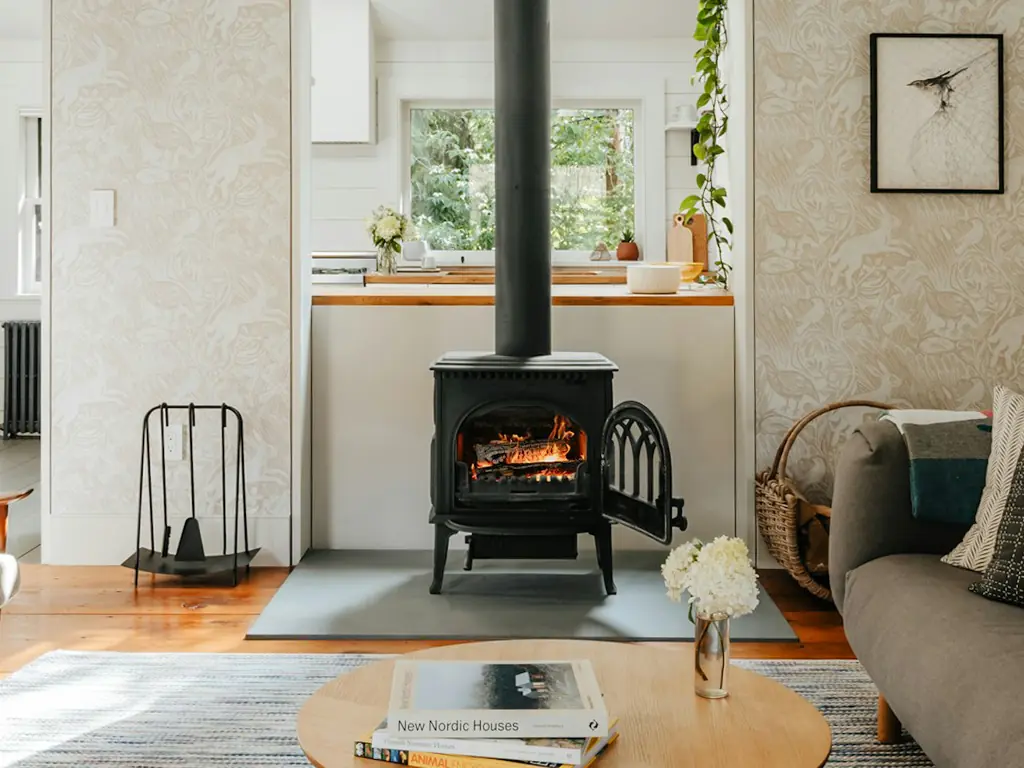
A few winters ago, my neighbour spent an entire Saturday morning getting quotes for a wood burning stove. By lunchtime he’d had three numbers that were nowhere near each other — one for £1,600, one for £3,200, and one that made him laugh out loud at £5,800. Same house, same chimney, same rough idea of what he wanted. He rang me confused, asking which one was “the real price.”
That’s the honest answer to most log burner questions: it depends, and it depends a lot. But there’s a sensible range, a set of reasons why quotes swing so wildly, and a way to work out what’s fair for your own home. That’s what this guide is for.
Quick Answer
For most UK homes, expect to pay somewhere between £1,800 and £5,500 for a full log burner installation, with £2,000 to £2,500 being a realistic average for a straightforward job into an existing, usable chimney. That figure usually covers the stove itself, a flue liner, hearth, register plate, sealants, a carbon monoxide detector, and labour from a HETAS-registered installer. If your chimney needs relining, rebuilding, or you have no chimney at all, costs climb quickly toward the top of that range — and sometimes beyond it.
What Does “Log Burner Fitting Cost” Actually Mean?
When people search for log burner fitting cost, they’re usually not just asking about the stove’s price tag. They want the whole picture — stove, materials, labour, certification, and any structural work bundled together into one honest number.
That’s an important distinction. A stove on its own might be advertised at £600 to £1,200, and it’s tempting to think that’s most of the bill. In reality, the appliance is often less than half the total spend once you factor in the flue system, hearth, fitting labour, and paperwork. Anyone quoting you a number that only covers the stove itself isn’t giving you the full picture — and that’s usually where budget surprises come from later.
How Log Burner Installation Actually Works
A proper installation isn’t just “put stove in fireplace, connect pipe, done.” There’s a sequence to it, and skipping steps is exactly how people end up with smoke-filled living rooms or worse.
1. Site survey. A decent installer will visit before you commit to a purchase. They’ll check the chimney’s condition, measure the room to calculate the right kW output, and look at ventilation.
2. Chimney and flue assessment. If you already have a working, swept chimney, they may only need to fit a stainless steel flue liner down through it. If the chimney is unlined, damaged, or you’re going into a room with no chimney at all, you’re looking at a full flue system — which is where costs jump.
3. Hearth preparation. The stove needs a non-combustible base that meets Building Regulations Part J. A simple hearth pad might be under £800; a bespoke stone or tiled hearth can run past £1,500.
4. Fitting the stove and connecting components. This includes the register plate (which seals the chimney base), high-temperature sealants at every joint, and a chimney cowl to keep weather and birds out.
5. Safety checks and certification. A carbon monoxide detector is a legal requirement in England for any new solid fuel appliance. Your installer should also test the draw and issue a certificate of compliance once everything’s signed off.
6. Building Control notification. This is the bit people forget. Installing a wood burner counts as notifiable work under Building Regulations. A HETAS-registered installer can self-certify and notify Building Control on your behalf. Anyone who isn’t registered has to go through your local authority separately, which adds cost, delay, and honestly, a fair bit of hassle.
Main Features of a Typical Installation
Here’s what a genuine, itemised quote should include:
- The stove itself — freestanding, inset, or double-sided, priced anywhere from a few hundred pounds to well over £2,000 for premium brands
- Flue liner or full flue system — usually stainless steel, sized correctly (6-inch for standard stoves, 5-inch for DEFRA-approved models)
- Chimney cowl — typically £220–£250, protects the top of the flue
- Hearth — non-combustible base sized to Building Regs
- Register plate — seals the chimney breast
- Sealants and fixings
- Carbon monoxide detector
- Labour — generally £200–£650 for a straightforward job, more for multi-storey properties or anything requiring scaffolding
- Certification and Building Control sign-off
Pros and Cons
Pros
- A well-fitted stove genuinely heats a room faster and more evenly than an open fire, and modern Ecodesign models are far more efficient than the old smoky ones
- Wood can be a cheaper fuel per kWh than electricity, and it’s broadly comparable to gas depending on how you source it
- There’s something to be said for the atmosphere — it’s not just marketing spin, a real fire changes how a room feels on a cold evening
- Adds a talking point and, for many buyers, a bit of kerb appeal when you come to sell
Cons
- Upfront cost is significant, and it’s easy to underestimate by focusing only on the stove price
- Ongoing costs aren’t trivial — fuel, sweeping, and servicing typically add £350 to £900 a year depending on how often you use it
- Poor installation is a genuine fire and carbon monoxide risk, not a theoretical one
- If you’re in a Smoke Control Area (most UK towns and cities are), you’re restricted to DEFRA-approved stoves
- Storage space for seasoned logs isn’t something every home has room for
Real-World Scenarios
Scenario one: the easy job. A semi-detached house with an original brick chimney that’s still in decent shape. Installer sweeps it, drops in a flue liner, fits a mid-range 5kW stove and a standard hearth. Total cost lands around £2,000 to £2,600. Job done in a day.
Scenario two: the surprise. A 1930s cottage where the homeowner assumed the chimney was fine because “there used to be an open fire here.” Turns out the flue is cracked and needs a full rebuild, plus new leadwork on the roof and scaffolding to reach it. What should’ve been £2,200 becomes closer to £4,800.
Scenario three: no chimney at all. A newer build, single-storey extension, no existing flue. This means a full external flue system running up through the roof, plus more extensive Building Control involvement. These jobs often sit at the top end, £4,000 to £5,500+.
The lesson across all three: the stove is rarely what determines your final bill. The chimney is.
Safety and Legitimacy: Is It Actually Regulated?
Yes, and this isn’t a box-ticking formality — it matters. Wood burner installation falls under Building Regulations Part J, covering fire safety, hearth dimensions, ventilation, and flue stability. Using a HETAS-registered installer means they can self-certify the work and notify Building Control automatically. If you go with someone who isn’t registered, you’re responsible for arranging Local Authority Building Control inspection yourself, which typically adds £150 to £550 and extra weeks to the process.
A few things worth knowing before you sign off on a quote:
- Ask to see the installer’s HETAS registration number and check it on hetas.co.uk — don’t just take their word for it
- You should receive a certificate of compliance at the end. Keep it safe; buyers’ solicitors ask for this during conveyancing, and its absence can genuinely stall a house sale
- Since January 2022, all new stoves sold in the UK must meet Ecodesign standards for emissions
- If you live in a Smoke Control Area — and most urban parts of England do — you’ll need a DEFRA-approved (exempt) stove
- A carbon monoxide detector fitted in the same room isn’t optional; it’s a legal requirement
DIY installation is technically possible but strongly discouraged, and not really for the reasons people assume. It’s less about the physical fitting and more about the certification headache and insurance risk if something goes wrong later.
Common Problems and Limitations
A handful of issues come up again and again with poor installations:
- Oversized stoves. Bigger isn’t better. A stove that’s too powerful for the room gets “slumbered” (run low and slow to avoid overheating), which causes poor combustion and heavy soot buildup on the glass and flue.
- Skipping the liner. Some installers try to save money by not relining an old chimney. This often leads to poor draw, smoke spillage into the room, and long-term safety issues.
- Wet wood. Using logs above 20% moisture content is probably the single biggest reason people end up disappointed with their stove’s performance. It causes tar buildup, poor heat output, and more smoke.
- Ventilation oversights. Modern homes are far more airtight than older ones, and stoves above 5kW often need a dedicated external air supply — something that’s easy to miss in older properties being retrofitted.
- Underestimating running costs. People budget for the installation and forget that fuel, sweeping (ideally once or twice a year), and the odd replacement part like door rope or fire bricks all add up.
How Does It Compare to Other Heating Options?
Compared with a boiler upgrade or underfloor heating, a log burner is a secondary heat source, not a full central heating replacement — worth being clear-eyed about that. It won’t heat your whole house on its own unless you’re in a small, well-insulated property.
Against an open fire, it’s a clear upgrade: dramatically more efficient, less heat lost up the chimney, and generally safer with the right flue liner. Against an electric stove or fire, running costs tend to favour wood, since electricity is typically the most expensive way to heat a room per kWh, though electric stoves are cheaper and far simpler to install since there’s no flue involved at all.
A Practical, Slightly Blunt Opinion
Having looked into this closely (and having sat through a fitter’s explanation of why my own chimney needed relining, much to my wallet’s dismay), here’s my honest take: a log burner fitting cost is worth paying properly for, once, rather than trying to shave it down.
The temptation to go cheap — skip the liner, use an unregistered fitter, “get a mate round” — almost always costs more eventually, whether that’s in poor performance, a failed inspection, or a chimney fire that insurance won’t cover because the work wasn’t certified. Get three quotes minimum, insist on seeing HETAS credentials, and don’t let anyone talk you into a stove that’s oversized for your room just because it looks impressive in the showroom.
Final Verdict
Log burners aren’t a scam, a gimmick, or an outdated relic — they’re a legitimate, well-regulated heating option that genuinely works when installed correctly. The cost feels steep upfront, particularly once chimney work is factored in, but for most homeowners it’s a one-off spend that pays back in comfort, and sometimes in fuel savings, over several winters. The real risk isn’t the price — it’s cutting corners to avoid it.
Read More Blogs: Well Shucks Nyt
FAQs
Q: What is the average log burner fitting cost in the UK?
A: Most straightforward installations land between £2,000 and £2,600, including the stove, flue liner, hearth, and labour. Full price ranges stretch from around £1,800 for a simple job to £5,500+ where major chimney or structural work is needed.
Q: Do I need planning permission to fit a log burner?
A: In most cases, no — it falls under permitted development. Exceptions include listed buildings, conservation areas with restrictions, or if the external flue doesn’t meet standard positioning rules.
Q: Can I fit a log burner myself to save money?
A: You can, but it’s not recommended. You’d still need to notify Building Control and pay for inspection, and any issues later can complicate home insurance and property sales.
Q: How much does it cost to run a log burner per year?
A: Ongoing costs, including fuel and an annual service, typically fall between £350 and £900 a year, depending on how often you use it and where you source your wood.
Q: Is a HETAS-registered installer necessary?
A: It’s not legally mandatory, but it’s strongly advisable. A HETAS installer can self-certify the work, which saves you the cost and delay of arranging Building Control inspection separately.
Q: Will a log burner add value to my home?
A: It can be an appealing feature for buyers, but its main value is comfort and running-cost savings rather than a guaranteed increase in sale price. A missing certificate of compliance, on the other hand, can actively cause problems during a sale.
Q: What’s the difference between a freestanding and inset log burner in terms of cost?
A: Freestanding stoves are generally cheaper and simpler to fit. Inset models look sleeker but usually need more structural work around the fireplace opening, which pushes the fitting cost higher.
