

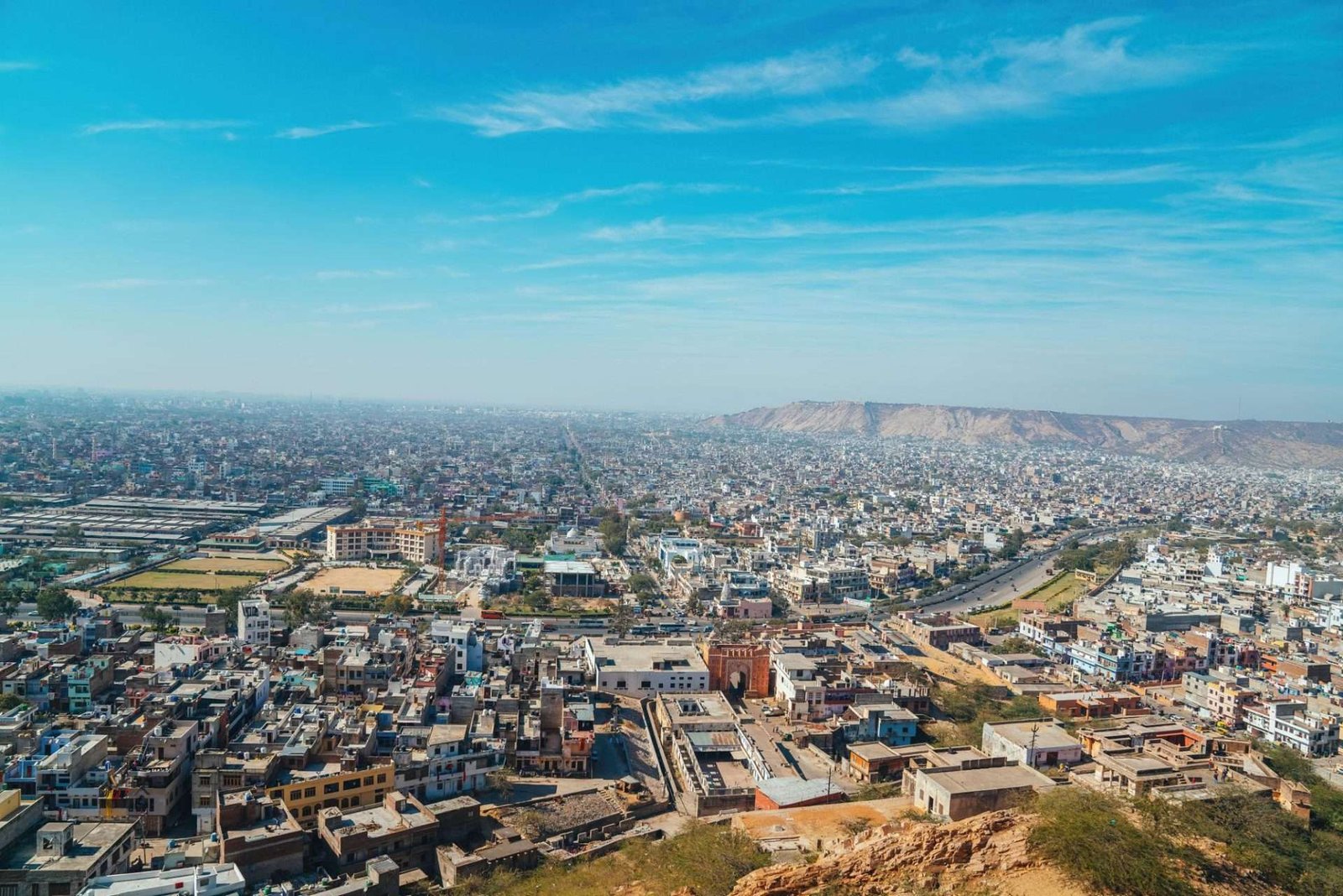
When you scroll through investment forums or property listings these days, Jaipur keeps popping up. But here’s the thing—most discussions around Jaipur’s real estate boom oversimplify what’s actually happening. The city isn’t experiencing some magical surge that guarantees wealth overnight. Instead, there’s a complex mix of genuine opportunities, infrastructure development, demographic shifts, and yes, some legitimate concerns you should understand before making any decisions.
Let me walk you through what this actually means, whether it’s something that should matter to you, and how the reality stacks up against the hype.
Quick Answer
Jaipur real estate market growth refers to the expansion in property values, transaction volumes, and new residential, commercial, and mixed-use construction happening across Rajasthan’s capital city, driven by factors like metro development, increased migration, rising disposable incomes, and improved connectivity. The market has grown significantly over the past decade, with average property prices increasing 40-60% between 2015-2024, though growth rates vary dramatically by neighborhood and property type. It’s neither a get-rich-quick scheme nor a dead investment—it’s a moderately growing tier-2 city market with real potential but also real risks.
What Is Jaipur Real Estate Market Growth?
Jaipur, traditionally known as the Pink City, has transformed from a tourist destination and administrative hub into an actual metropolitan area. When people talk about growth in this context, they’re referring to several interconnected phenomena:
The basic definition: The increase in property demand, construction activity, rental yields, and property valuations across Jaipur’s residential, commercial, and retail sectors. But that’s just the surface.
What’s actually interesting is why this is happening now. For decades, Jaipur was a sleepy state capital. You had the palace, the heritage tourism, a modest local economy. Then somewhere around 2010-2012, things started shifting. Developers took notice. People who weren’t even born in Jaipur started moving there for jobs. Property that was worth ₹1.5 lakh per square foot in 2015 is now trading at ₹2.5-3.5 lakh in better localities.
The market includes everything from affordable housing projects targeting middle-class buyers to luxury condominiums, commercial office spaces, retail corridors, and industrial parks on the outskirts. Each segment has experienced different growth rates and dynamics.
One important nuance: Jaipur’s growth isn’t uniform. C-scheme might see 8% annual appreciation, while some newer developments on the periphery might still be struggling to attract buyers. This matters a lot if you’re actually considering investment.
How Jaipur’s Real Estate Market Actually Works
Understanding the mechanics behind this growth is crucial, especially if you’re thinking about getting involved.
The demand side: Jaipur’s population has grown from about 3 million in 2010 to roughly 4.5 million today. That growth comes from multiple sources—natural increase, yes, but also migration. Software engineers from Bangalore move here for cost-of-living reasons. People from smaller towns come for education and jobs. Plus, Jaipur attracts young families because living costs are significantly lower than metros like Delhi, Mumbai, or Bangalore.
The supply side: Developers have responded aggressively. The number of ongoing projects increased dramatically after 2015. Companies like Prestige Group, Lodha, Sobha, Ashiana, and local developers got serious about Jaipur. New residential micro-markets emerged—areas that were pure farmland fifteen years ago now have thousands of apartments.
The infrastructure component: This is where things get interesting. The Jaipur Metro project has been actively under construction, with Phase 1 already operational on certain lines. This changes property dynamics because land near metro stations commands premium valuations. Similarly, road connectivity improvements, airport expansion, and industrial corridors have made various areas more accessible.
The financing piece: Banks got more aggressive with lending in Jaipur around 2015-2017. This made home ownership more achievable for middle-class buyers, which increased demand. The reverse happened during COVID and subsequent rate hikes, creating periods of stagnation.
The investor angle: Property investors—both local and from other states—started viewing Jaipur as an emerging market. When investors enter a market with capital, they influence prices, rental rates, and development patterns. This is partly why some areas have experienced rapid appreciation.
The interaction between all these elements creates what people call “market growth.” It’s not random—it’s predictable economic behavior responding to real conditions.
Main Features of Jaipur’s Real Estate Expansion
What specifically makes Jaipur’s property market different from, say, five years ago or from other Indian cities of similar size?
Emerging micro-markets: Traditional areas like C-Scheme, C-Block, and Malviya Nagar still command premium prices. But newer localities have developed distinct identities. Areas like Jagatpura, Pratap Nagar, and zones near the Jaipur Airport have become attractive to specific buyer segments—young professionals, first-time buyers, families seeking better infrastructure.
Diverse project types: You’re no longer seeing just standalone apartments. There are mixed-use developments with retail, residential, and office space. There are IT parks and tech hubs. There are affordable housing projects specifically targeting low-income groups. This diversity reflects a maturing market.
Improving connectivity: The metro expansion has been game-changing for certain corridors. Buses are better. Roads are getting wider. The airport has expanded capacity. These tangible improvements reduce friction in daily life and make locations more valuable.
Rental market development: Previously, Jaipur was primarily a buy-for-residence market. Now, rental yields of 3-5% per annum are attracting investors interested in regular cash flow, not just appreciation. This signals market maturity.
Rising commercial real estate: Not everyone talks about this, but Jaipur’s commercial space—offices, retail, warehouses—has expanded significantly. Companies are setting up operations here, which drives job creation, which drives residential demand. It’s a virtuous cycle.
Sustainability focus: Newer projects are incorporating green spaces, water harvesting, and energy-efficient designs. This reflects changing buyer preferences and regulatory compliance.
Affordable housing push: Government mandates and buyer needs have led to substantial affordable housing projects. This expands the market beyond luxury and upper-middle segments.
These aren’t just superficial changes. They represent an actual economic ecosystem maturing.
Real-World Market Dynamics: Examples and Scenarios
To understand whether Jaipur’s growth matters to you, let’s look at specific situations:
Scenario 1: The Migration Story Meet Priya, a software engineer who moved from Bangalore to Jaipur in 2019. She bought a 2BHK in Jagatpura for ₹65 lakhs. Today, similar properties in that complex are selling for ₹95-105 lakhs. That’s a 45% appreciation over five years. Her rental income is ₹35,000 per month (about 4.3% yield). She didn’t get rich quick, but she’s ahead. This is a real outcome that’s happening for thousands of people.
Scenario 2: The Speculative Trap Rajesh invested ₹50 lakhs in three properties across different developers in 2017-2018, betting on Jaipur’s growth. One property appreciated to ₹75 lakhs (50% gain). Another barely moved to ₹52 lakhs (4% gain). The third got stuck at ₹48 lakhs—he actually lost money. Why the variance? Location selection, project execution, and market saturation in specific micro-markets. He made emotional rather than data-driven decisions.
Scenario 3: The Rental Income Focus Kavya purchased a studio apartment in Vaishali Nagar for ₹35 lakhs in 2020, focusing purely on rental returns rather than appreciation. She rents it out for ₹15,000 per month consistently. That’s about 5.1% annual yield—better than many fixed deposits. Her appreciation has been modest (perhaps 15% over four years), but her primary goal was steady cash flow, which she’s getting.
Scenario 4: The Timing Problem Ashok bought during 2021-2022 when prices were near their peak. He paid ₹1.2 crores for an apartment. Two years later, prices in his building are ₹1.05 crores. He’s underwater. But his monthly rent covers his maintenance costs and small portion of his mortgage. His loss is temporary only if the market recovers and he has patience.
These aren’t hypothetical. They represent patterns you’ll find across Jaipur’s real estate market. Growth exists, but it’s not evenly distributed, and timing matters enormously.
Benefits: What’s Actually Working
Let’s be honest about what’s genuinely positive:
Reasonable valuations compared to metros: A quality apartment costs ₹70-90 lakhs in Jaipur versus ₹3+ crores in Mumbai or Bangalore. That’s real affordability.
Solid rental yields: Unlike many Indian metros where rent-to-price ratios are 2-3%, Jaipur offers 4-5% yields. That attracts investors seeking income.
Job market expansion: The rise of IT companies, manufacturing hubs, and business process outsourcing has actually increased employment opportunities. This isn’t manufactured—companies are actually hiring.
Infrastructure momentum: Metro construction, road widening, and airport expansion aren’t stalled projects. They’re actively happening and improving connectivity.
Buyer diversity: The market isn’t dependent on one segment. First-time buyers, investors, NRIs, and corporate relocations all participate, which creates stability.
Lower interest rates on loans: While rates have risen recently, they’re still lower than a decade ago, making property ownership more achievable for middle-income groups.
Established developer presence: Reputable national developers operate in Jaipur, which improves construction quality and transparency compared to markets dominated by small local builders.
Drawbacks and Honest Limitations
Now, because I’m trying to be actually useful rather than promotional:
Highly localized growth: Not all of Jaipur is growing equally. Invest in the wrong pocket, and you might see minimal appreciation or even depreciation. This requires real research, not guessing.
Market saturation in certain areas: Some localities have so much new construction that supply is outpacing demand. Buying in oversaturated markets is risky.
Slow rental market in many zones: If your rental return assumption is 4-5%, that’s only true in specific micro-markets. Some areas see much lower returns.
Traffic and infrastructure lags in reality: While projects are happening, actual road completion often delays. The metro, while opening, still serves limited corridors. Infrastructure isn’t as seamless as brochures suggest.
Liquidity concerns: Selling a property in Jaipur isn’t always quick. During market downturns, finding buyers takes months. Your capital can get stuck.
Weather and environmental factors: Water scarcity has been a recurring concern for Jaipur. This affects both livability and long-term valuations. Climate patterns matter.
Speculative investor inflow: A chunk of recent buying has been speculative rather than occupancy-based. When speculators exit, prices can correct sharply.
Limited exit routes for NRIs: If you’re an NRI investing remotely, selling later can involve bureaucratic complications and delays.
Regulatory uncertainty: Real estate regulations in Rajasthan evolve. What seemed like a good investment avenue suddenly faces new compliance requirements.
Appreciation isn’t guaranteed: A 5-8% annual appreciation is often assumed. Historical data suggests this is optimistic in many pockets. Realistic expectations are 3-6% annually.
Who Is Jaipur Real Estate Growth Actually For?
Let me cut through the noise. This matters to specific people:
First-time homebuyers in the 25-40 age bracket: If you work in Jaipur, earn ₹7-15 lakhs annually, and want to own rather than rent, Jaipur makes mathematical sense. You get reasonable valuations, decent appreciation potential, and occupancy benefit. This is the primary market, and it’s legitimate.
Young professionals relocating for jobs: If you’re moving to Jaipur for work at an IT company, consulting firm, or corporate job, buying makes sense over a 5-10 year horizon. You stabilize your housing cost and build equity.
Investors seeking reasonable cash flows: If you’re looking for steady rental income (4-5% per annum) without chasing huge appreciation, Jaipur works. Especially in established micro-markets with predictable tenant demand.
NRIs seeking India exposure: For diaspora members wanting a property in India as a hedge or family base, Jaipur is more practical than central Mumbai or Bangalore.
Mid-career relocators: Professionals moving from metros who want a better quality of life with lower costs find Jaipur attractive.
Who it’s NOT for: Get-rich-quick investors, speculators expecting 20%+ annual returns, people who need liquid exits quickly, those unwilling to research local micro-markets, or people buying on hype without understanding underlying demand.
Safety, Legitimacy, and Risk Analysis
Is Jaipur’s real estate market legitimate or a bubble?
The legitimacy check: The growth is based on real factors—actual population migration, job creation, infrastructure investment, and regulatory frameworks. These aren’t artificial. Banks are lending because they see actual repayment capacity. This isn’t a Ponzi scheme. Legitimate growth is happening.
The bubble risk check: Some sectors show bubble characteristics—certain micro-markets have seen speculative buying, projects sit with high inventory, and prices in some zones haven’t justified fundamental demand. So yes, there’s bubble risk in specific pockets, not the entire market.
The developer risk: Always verify developer credentials. National developers with track records in other cities are safer than new players. Check RERA registration, past project deliveries, and financial health. Many legitimate projects exist alongside dubious ones.
The location risk: More critical than developer is location selection. A property in a saturated area by a questionable developer is worse than a property in a growing corridor by a reliable builder. Location > Builder > Price.
The financing risk: Use reasonable leverage. Don’t stretch your loan-to-value ratio beyond 70% if you can avoid it. Banks will lend you money you can’t actually afford to repay—that’s their job.
The regulatory risk: RERA registration is mandatory. Verify it. Some projects operate in gray areas legally. Avoid them, regardless of promised returns.
The infrastructure timing risk: Don’t buy solely based on “metro will launch next year” predictions. Delays happen. Judge a property’s merit based on current conditions, not promised future amenities.
Common Problems and Realistic Expectations
If you do venture into Jaipur real estate, understand these common challenges:
Slow project execution: Developers often miss completion timelines. A 2-3 year delay isn’t unusual. This affects your possession timeline and rental income projections.
Hidden charges after possession: Builder-quoted prices often exclude GST, registration, maintenance deposits, and other charges that add 10-15% to your final outlay.
Quality fluctuations: Not all projects maintain consistent construction quality. Sometimes corner-cutting happens in later phases.
Resale challenges: In some pockets, finding buyers at prices you expect takes longer than you planned. Rental rates often don’t match ownership-based expectations.
Tenant issues: If you’re renting out, finding reliable tenants, managing disputes, and handling vacancies are real operational challenges people often underestimate.
Regulatory surprises: A new policy might restrict rental periods, cap rent increases, or impose new maintenance standards. Your investment thesis can shift suddenly.
Liquidity mismatch: You need money quickly, but finding a buyer at your asking price isn’t possible. You have to discount, which erodes returns.
Comparison With Alternative Investment Options
How does Jaipur real estate stack up against other investment vehicles?
Versus fixed deposits: FDs offer guaranteed 6-7% returns with zero effort and zero illiquidity risk. Real estate offers 4-6% rental yields plus appreciation potential but with massive illiquidity and effort. FDs win on safety and simplicity, real estate wins on potential upside and inflation hedging.
Versus mutual funds: Equity mutual funds have delivered 12-15% returns historically over long periods. Real estate typically delivers 6-9%. Mutual funds are easier to buy and exit. Real estate offers tangible asset ownership. Depends on your risk tolerance and liquidity needs.
Versus gold: Gold is highly liquid but offers no income (unless leased). Real estate offers income through rent. Over 10+ year horizons, real estate typically outpaces gold due to rental income, but both hedge inflation.
Versus stocks: Direct stock investing in companies offers potentially higher returns but requires expertise. Real estate is more passive once you own it. Stocks are liquid, real estate isn’t.
The honest take: Real estate isn’t better than all alternatives universally. It’s better for people with long time horizons, who want tangible assets, who can tolerate illiquidity, and who can conduct proper due diligence.
Practical Insights From Market Observation
Based on actual market behavior in Jaipur, here’s what actually works:
Micro-market matters more than macro: Whether Jaipur grows overall matters less than whether your specific neighborhood is growing. Spend time on the ground. Drive through the areas multiple times. Check occupancy rates of existing buildings.
Builder reputation is a good signal but not foolproof: A project by Prestige Group or Sobha is safer than an unknown developer. But even reputable builders sometimes disappoint. Research their specific Jaipur projects, not just their brand overall.
Price-to-rent ratios are revealing: Calculate the ratio between property price and annual rental income. A ratio of 15-20 is reasonable (meaning 5-6.7% yield). Above 25-30, you’re overpaying relative to rental income potential.
Demographics are destiny: Buy where working professionals, young families, and students live. Places with employment generation sustain property demand. Dead areas stay dead.
Possession timeline matters: A property with possession in 6 months is different from one promised in 3 years. Delays destroy timelines and alter your financial projections significantly.
Own at least partially for occupancy: If the property doesn’t work as a residence for you, consider whether it will work for tenants. Some markets have great owner-occupancy demand but poor rental potential, and vice versa.
Diversify within the city: If buying multiple properties in Jaipur, spread them across different micro-markets and price segments. This hedges the risk of one area stalling.
The Expert Perspective: What’s Actually Happening
Jaipur’s real estate market is experiencing genuine but moderate growth—not a boom, and not a bubble either. It’s a tier-2 city’s natural maturation coupled with urbanization trends, job creation, and infrastructure development.
The growth rate of 5-8% annually is reasonable and sustainable based on fundamentals, not speculation. However, this rate isn’t uniform. Some pockets grow at 10-12%, others at 2-3%, and some might appreciate at near-zero rates.
The biggest risk isn’t that Jaipur stops growing. It’s that you pick the wrong pocket or overpay. A mediocre property in a premium location typically outperforms a premium property in a mediocre location.
The market rewards informed buyers who do local research and punishes speculative buyers chasing narratives. This dynamic separates profitable investments from disappointing ones.
Final Verdict
Is Jaipur real estate market growth real? Yes, it’s based on genuine economic factors.
Is it a wise investment for everyone? No. It depends entirely on your financial situation, timeline, risk tolerance, and ability to research local micro-markets.
Should you invest now? Only if you’ve thoroughly evaluated specific properties and micro-markets. General “Jaipur is growing” reasoning is insufficient. The answer is: some properties and areas, yes; many others, probably not.
The bottom line: Jaipur offers legitimate opportunities for property appreciation and rental income. It’s not a get-rich-quick play, and it’s not a poor investment either. It’s a moderately growing city offering reasonable valuations and steady appreciation for informed investors willing to do their homework.
If you’re a first-time homebuyer employed in Jaipur or an investor seeking stable 4-5% rental returns without metro-level valuations, it makes sense. If you’re seeking guaranteed 15-20% annual returns or quick profits, look elsewhere.
Read Next blog: Louisiana-Real-Estate-Commission
FAQs
Q: What’s a realistic annual appreciation rate I should expect in Jaipur?
A: Historically, 5-8% annually is realistic in good locations, though some pockets offer 3-4% and hot areas might see 10-12% in specific periods. Don’t model for more than 7-8% as a baseline. Market corrections happen, which drag down long-term averages.
Q: Which Jaipur neighborhoods offer the best growth potential right now?
A: Areas with metro connectivity or planned connectivity (Vaishali Nagar, New Sanganer Road), zones with IT company presence (near Mahindra SEZ), and established micro-markets seeing infrastructure upgrade (C-Scheme periphery) show solid potential. Avoid completely saturated areas and fringe developments without clear demand drivers.
Q: How do I assess if a specific property is overpriced?
A: Compare price-to-rent ratios with similar properties in the area, check average price per square foot, and assess occupancy rates in the building. If prices are 25-30% higher than comparable properties nearby without clear justification, you’re likely overpaying.
Q: Should I buy through a developer directly or resale?
A: Resale offers immediate possession, no construction risk, and better price negotiation. Direct booking offers pre-completion payment discounts and first-choice of unit placement. Resale is generally safer, though you’ll pay slightly higher effective prices.
Q: Is it better to invest in Jaipur or Bangalore/Pune?
A: Bangalore and Pune have higher appreciation historically (8-12% vs. 5-7%) but also higher entry prices. Jaipur offers similar percentage returns with lower absolute capital required. Choose based on your capital availability and required rental yields, not on which city sounds “better.”
Q: What are the main costs I’ll incur beyond the property purchase price?
A: Registration (5-6% of property value), stamp duty, GST (on new projects), builder charges, maintenance deposit, property tax, and various approvals. Budget for 15-20% additional to the listed property price for all hidden costs.
Q: How liquid is the Jaipur property market? Can I sell quickly if needed?
A: Properties typically take 3-12 months to sell, depending on price, location, and market condition. Premium locations in established areas sell faster. Distant locations or overpriced properties linger. Don’t assume you can liquidate within weeks like stocks.
Q: What’s the tenant situation in Jaipur? Are there reliable renters?
A: Tenant quality varies by area and property type. Established micro-markets with working professionals have stable tenant bases. Newer areas face higher vacancy risks and longer tenant-finding periods. Budget for 15-20% of rental income as vacancy buffer.
Q: Should I consider Jaipur real estate if I’m based outside India?
A: Possible but complicated. You’ll face FEMA regulations, currency risk, distance management challenges, and liquidity issues. Hire a local property manager and lawyer. Expected returns should be 7-8%+ to justify these complications.
Q: Is now a good time to invest in Jaipur, or should I wait?
A: Jaipur market doesn’t show dramatic correction risks in the near term, but it’s not in a historic low either. If you find a specific property at a reasonable price-to-rent ratio in a growing neighborhood, that’s a good time. Waiting for a 20-30% crash is unlikely to happen.
Q: How do infrastructure projects like metro affect property valuations?
A: Significantly, but not uniformly. Properties within 500-800 meters of a metro station typically see 15-25% appreciation over 2-3 years around construction. Far-off properties see minimal direct benefit. Location relative to metro matters more than metro existence.
Q: What due diligence should I do before buying?
A: Verify RERA registration, check builder’s track record on similar projects, visit the property and neighborhood multiple times, verify legal clearances, check municipal clearance (commencement certificate), assess occupancy rates if it’s a resale, and hire a local lawyer for title verification.
Q: Can I get good rental returns in Jaipur without buying premium properties?
A: Yes. Mid-range properties (₹60-90 lakhs) often offer 4.5-5.5% yields versus luxury properties at 2-3%. You sacrifice potential appreciation but gain better cash-on-cash returns. This works well if your focus is income, not capital gains.
