

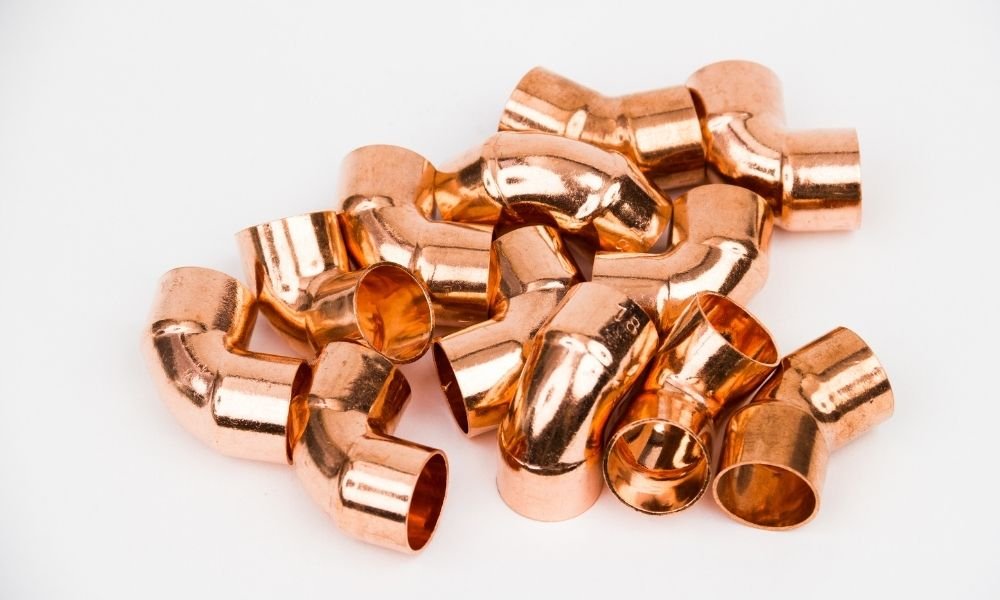
I still remember the first time a plumber pulled a handful of small brass-colored pieces out of his tool bag and started soldering them onto a pipe under my kitchen sink. I had no idea what they were called, and honestly, I didn’t ask — I just assumed it was some kind of specialty part only professionals could buy. Turns out, those little connectors are sold at pretty much every hardware store in the country, and understanding what they do can save you a service call the next time your water line springs a leak.
If you’ve landed here because your search bar is full of half-finished questions like “what connects copper pipes” or “do I need special fittings for copper tubing,” you’re in the right place. This isn’t going to be a dry parts catalog. It’s a practical walkthrough of what these connectors actually do, when they’re worth using, and where people tend to mess them up.
Quick Answer (For Anyone in a Hurry)
Copper tubing fittings are small connector pieces — elbows, couplings, tees, unions, and adapters — used to join, branch, or terminate sections of copper pipe in plumbing, HVAC, and refrigeration systems. They’re typically installed by soldering (sweating), compression, or press-fit methods, and they’re considered one of the most reliable ways to build a leak-resistant water or gas line, provided they’re sized and installed correctly.
That’s the one-paragraph version. Now let’s get into the details that actually matter when you’re standing in the plumbing aisle trying to figure out which one to buy.
What Are Copper Tubing Fittings, Really?
At the most basic level, a fitting is anything that changes the direction, diameter, or number of paths a pipe takes. Copper tubing on its own is just a straight tube — it can’t turn a corner, split into two lines, or connect to a fixture by itself. That’s where fittings come in.
They’re usually made from copper or copper alloys like brass, which matters because dissimilar metals touching each other can trigger corrosion over time (more on that later). You’ll find them in a few common shapes:
- Elbows – change the direction of a pipe run, usually 45° or 90°
- Couplings – join two straight sections of pipe end to end
- Tees – split one line into two, often used for branch lines
- Unions – allow a section of pipe to be disconnected without cutting it
- Reducers/adapters – step down or step up pipe diameter, or transition to a different material like PEX or steel
Most homeowners encounter these in one of three places: under sinks, near a water heater, or inside an HVAC/refrigeration unit. Contractors also use them extensively in commercial plumbing, radiant heating systems, and even some gas lines, depending on local code.
How Copper Tubing Fittings Actually Work
The mechanics are simpler than they sound. A fitting has a socket — basically a cup-shaped opening slightly larger than the outer diameter of the pipe. The pipe slides into that socket, and then the joint gets sealed using one of a few methods:
Soldering (sweating): This is the classic method. You clean both surfaces, apply flux, heat the joint with a torch, and let solder wick into the gap by capillary action. Done right, it creates a permanent, extremely strong bond that can handle high pressure and temperature.
Compression fittings: No torch required. A nut and a small ring (called a ferrule) compress around the pipe when tightened, creating a watertight seal. These are popular for DIY repairs because they’re forgiving and reversible.
Press-fit fittings: A newer option that uses a specialized tool to mechanically crimp the fitting onto the pipe, complete with an internal rubber O-ring for sealing. No flame, no flux — just a tool and a few seconds of pressure.
Flare fittings: Common in gas lines and refrigeration, these use a flared pipe end that’s squeezed against a fitting with a nut, no solder needed.
Each method has its place. A basement full of copper pipe on a new home build is probably going to be soldered. A quick under-sink repair on a Saturday afternoon is more likely to use compression or press-fit, simply because most people don’t have a torch sitting in their junk drawer.
Main Features Worth Knowing About
A few things set copper fittings apart from the plastic or steel alternatives you’ll also see on the shelf:
- Corrosion resistance — copper naturally resists rust and most forms of corrosion, which is part of why it’s lasted as the plumbing standard for decades
- Heat tolerance — copper fittings handle high temperatures far better than PVC or PEX, which matters near water heaters or boilers
- Rigidity — unlike flexible tubing, copper holds its shape, which some installers actually prefer for exposed runs because it looks cleaner
- Antimicrobial properties — copper has a natural ability to inhibit bacterial growth inside the pipe, which is a small but real advantage for potable water lines
- Recyclability — copper scrap has real resale value, so old fittings rarely just end up in a landfill
None of these features are marketing fluff — they’re the actual reasons copper has stayed relevant even as PEX has eaten into its market share over the last fifteen years.
Pros and Cons: The Honest Breakdown
Pros
- Extremely durable when installed correctly — some copper systems last 50+ years
- Handles both hot and cold water lines without degrading
- Works well in high-pressure and high-temperature applications like heating systems
- Widely available and code-approved almost everywhere in North America
- Doesn’t leach chemicals into water the way some plastics can under heat
Cons
- More expensive than PEX, both in material cost and labor
- Soldering requires skill, a torch, and a genuine fire risk if done carelessly
- Vulnerable to galvanic corrosion when paired with the wrong metal
- Copper prices fluctuate with commodity markets, so cost isn’t always predictable
- Freezing temperatures can crack copper pipe if it isn’t properly insulated
I’ll be honest — the cost difference is the thing that trips most people up. A box of copper fittings can run two or three times what the equivalent PEX fittings cost. For a full re-pipe on an older home, that difference adds up fast, and it’s a legitimate reason some homeowners choose PEX instead, even knowing copper has a longer track record.
Real-World Scenarios Where These Fittings Show Up
Scenario one: A tee fitting under a bathroom sink lets one supply line branch off to feed both the sink and a nearby toilet without running a second pipe all the way back to the main line.
Scenario two: An HVAC technician replacing a condenser coil uses flare fittings to connect refrigerant lines, since the connection needs to handle both pressure and occasional disassembly for servicing.
Scenario three: A homeowner doing a DIY dishwasher install uses a compression fitting to tap into an existing cold water line, avoiding the need for a torch in a kitchen full of flammable cabinetry.
These aren’t hypothetical — they’re the exact situations where fittings get chosen based on practicality, not just theory. The “right” fitting often comes down to what tools you have and how comfortable you are with open flame near your cabinets.
Safety, Legitimacy, and What to Watch Out For
There’s nothing shady about copper tubing fittings — they’re a standard, code-recognized plumbing component sold by every major manufacturer, including reputable names like NIBCO, Mueller Industries, and Streamline. That said, a few safety points genuinely matter:
- Lead content: Older solder used lead, which is now banned for potable water lines in the U.S. under the Safe Drinking Water Act. If you’re working on an older home, confirm any existing solder joints predate this and consider having them assessed.
- Fire risk during soldering: Torch work near wood framing or insulation is a real fire hazard. Professionals use heat shields for a reason.
- Galvanic corrosion: Never connect copper directly to galvanized steel without a dielectric union in between — the two metals react and corrode faster than either would alone.
- Code compliance: Not every fitting method is approved for every application in every jurisdiction. Gas lines, in particular, have strict rules about which fittings are allowed.
If a fitting or system is properly rated, installed to code, and inspected, there’s no legitimacy concern here — this is mainstream, decades-proven plumbing technology, not some trendy gadget.
Common Problems and Limitations
Even good fittings fail sometimes, usually for predictable reasons:
- Incomplete solder joints — if the pipe wasn’t cleaned or fluxed properly, the joint can leak months or years later
- Overtightened compression fittings — cranking too hard can deform the ferrule and cause a slow leak instead of preventing one
- Wrong fitting size — copper tubing comes in different wall thicknesses (Type K, L, and M), and mismatching a fitting to the wrong type can cause a poor seal
- Corrosion from acidic water — in areas with low pH water, copper pipe can develop pinhole leaks over time, which isn’t really the fitting’s fault but does affect the whole system
None of these are dealbreakers, but they explain why “I used copper fittings and it still leaked” almost always traces back to installation, not the part itself.
How They Compare to Alternatives
| Factor | Copper Fittings | PEX Fittings | PVC/CPVC Fittings |
| Cost | High | Low-Medium | Low |
| Install difficulty | Moderate-High (soldering) | Low | Low-Moderate |
| Heat tolerance | Excellent | Good | Fair (CPVC better than PVC) |
| Longevity | 50+ years | 25-40 years | 25-40 years |
| Flexibility | Rigid | Flexible | Rigid |
| Best for | Hot water, high-pressure, exposed runs | Repipes, tight spaces, DIY | Drain lines, cold water |
PEX has become the go-to for new residential construction largely because it’s faster and cheaper to install, and it flexes around obstacles instead of requiring precise elbow joints. But copper still wins on raw longevity and heat handling, which is why you’ll still see it specified for water heater connections even in homes that are otherwise fully PEX.
An Honest, Practical Opinion
If you’re doing a small repair — swapping a fitting under a sink, extending a line a few feet — compression or press-fit copper fittings are genuinely a good call. They’re forgiving, don’t require a torch, and hold up fine for residential water pressure.
If you’re doing a full repipe or new construction, that’s a bigger decision. Copper is the more “traditional” and arguably more durable choice, but the cost gap versus PEX is real enough that a lot of professional plumbers now recommend PEX for whole-house jobs and reserve copper for the first few feet near the water heater, where heat resistance actually matters most. That’s not copper losing to a fad — it’s a legitimate cost-benefit tradeoff based on decades of installation data.
Where copper tubing fittings genuinely shine is in situations demanding reliability under stress: boiler systems, radiant heat, commercial kitchens, and refrigeration lines. In those settings, the extra cost is easy to justify.
Final Verdict
Copper tubing fittings aren’t flashy, and there’s no controversy or gimmick here — they’re a proven, code-approved plumbing component that’s been the backbone of residential and commercial water systems for generations. They cost more than plastic alternatives and demand more skill to install properly, especially with soldered joints, but the payoff is a connection that can genuinely outlast the building around it.
For anyone weighing whether to use them: if durability, heat resistance, and long-term reliability matter more than upfront cost, copper fittings are a solid, legitimate choice — not an overhyped one.
Read More new blogs: Finland Startup News
FAQs
Q: Can I mix copper fittings with PEX or PVC pipe?
A: Yes, with the right transition adapter. You’ll need a fitting specifically designed to bridge the two materials, since copper and plastic pipe have different outer diameters and expansion rates.
Q: Do copper tubing fittings need to be soldered, or are there no-solder options?
A: No-solder options exist — compression fittings and press-fit fittings both create watertight seals without a torch, making them popular for DIY repairs.
Q: How long do copper fittings typically last?
A: Properly installed copper fittings often last 50 years or more, though water chemistry, pipe type (K, L, or M), and installation quality all affect actual lifespan.
Q: Is it safe to use old copper fittings that might contain lead solder?
A: Lead solder was banned for potable water systems in the U.S. in 1986. If your home predates that and hasn’t been repiped, it’s worth having a plumber inspect the joints or testing your water for lead.
Q: Why do my copper fittings keep leaking even after I tightened them?
A: This usually points to an installation issue — an improperly seated ferrule on a compression fitting, an incomplete solder joint, or a mismatched fitting size for your pipe’s wall thickness (Type K/L/M).
Q: Are copper tubing fittings better than PEX for a whole-house repipe?
A: Not necessarily “better” — copper offers longer lifespan and better heat tolerance, but PEX is cheaper, faster to install, and more forgiving for DIY or budget-conscious projects. The right choice depends on your budget and priorities.
