

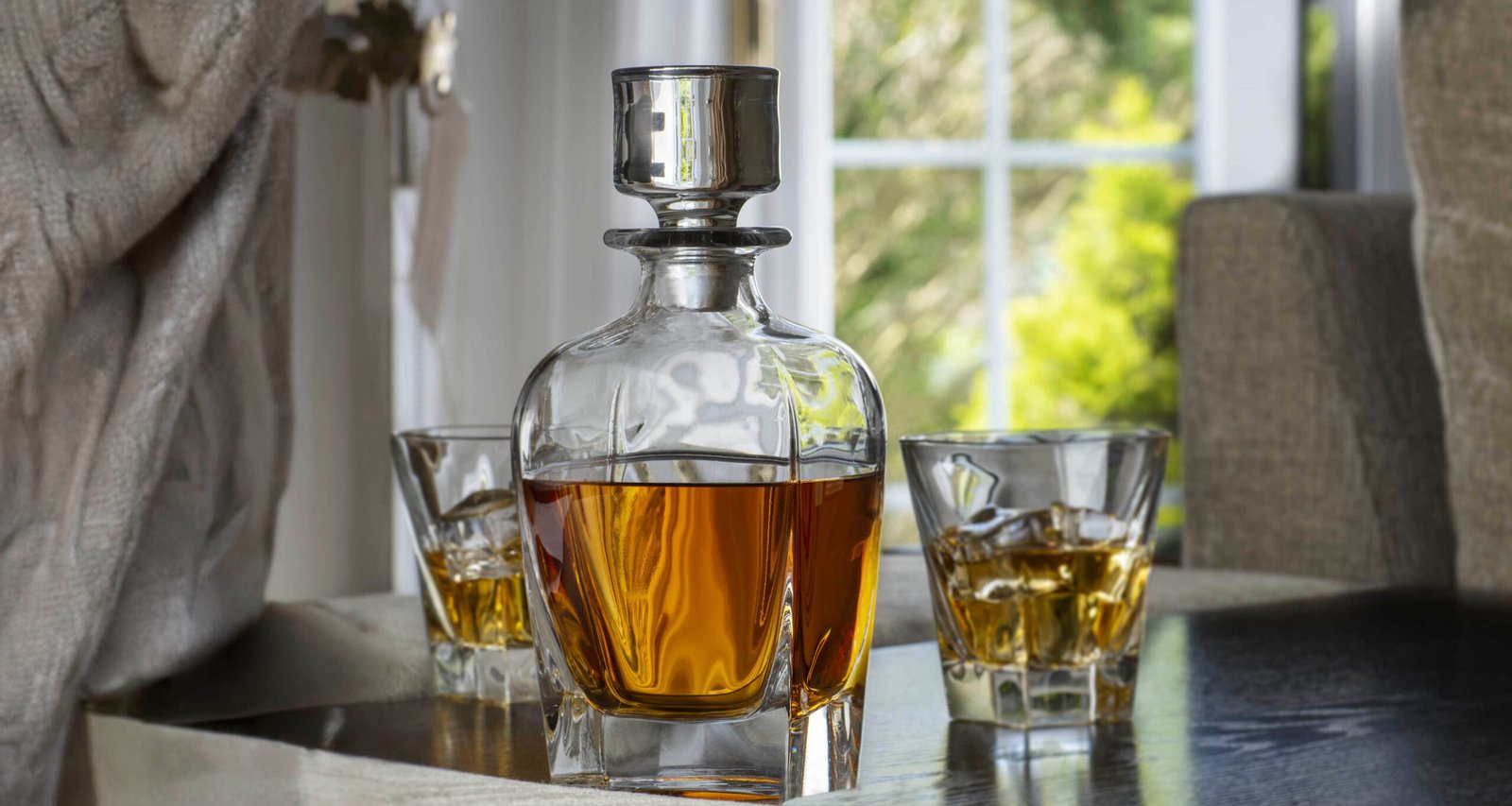
A friend once brought over a bottle of bourbon for a quiet dinner at home. Nothing fancy was planned. We had grilled food, a playlist running in the background, and a few mismatched glasses pulled from the cabinet. Then he placed the bottle beside a heavy cut-glass decanter on the counter and asked if we should use it.
It seemed like a small thing. But once the amber spirit was poured into the glass, the whole evening felt different. A little slower, maybe. More deliberate. We weren’t suddenly experts in rare whiskey, but the simple act of pouring from something beautiful made the first drink feel like an occasion.
That’s the charm of a whiskey decanter. It isn’t essential, and it won’t turn an ordinary bottle into a legendary one. Still, it adds personality to a home bar and gives a familiar drink a more thoughtful presence.
Why People Still Love Decanters
There’s a reason decanters have stayed around while plenty of other bar trends have come and gone. They sit somewhere between practical and sentimental. A well-made one is useful for serving, but it also becomes part of the room. You notice it on a shelf, on a bar cart, or in the middle of a dinner table after everyone has finished eating.
For some people, a decanter brings back memories of a parent or grandparent who had one tucked away in a cabinet. For others, it feels like the first proper addition to a new apartment or a newly finished home bar. It has that rare quality of being both decorative and personal.
And honestly, bottles aren’t always attractive. Some labels are great. Others are loud, crowded, or just not your style. A decanter gives you a cleaner look without taking the drink too seriously.
It can also make hosting easier. Instead of passing a bottle around the room, you place the decanter on the table with a few glasses and let people help themselves. There’s a relaxed confidence to it. Nothing forced, no big speech about tasting notes—just a good pour shared with good company.
Does Using a Decanter Improve the Taste?
This is where a lot of people get confused, mostly because decanters are so closely linked with wine.
Wine often benefits from being exposed to air before serving. Whiskey is different. It has already spent years, sometimes decades, aging in a barrel before it reaches the bottle. Its flavors are settled. It doesn’t need to “open up” in the same way.
Pouring whiskey into a decanter usually won’t change the taste much in the short term. You may notice a slight softening in the aroma if it sits for a while, but that’s about it. The real benefit is presentation and ritual.
That said, air does matter over long periods. If the stopper doesn’t seal properly, alcohol can slowly evaporate. The whiskey may lose some brightness and character, especially when the container is half empty. It won’t happen overnight, so there’s no need to panic if you fill one for a weekend gathering. But if you’re planning to store a favorite single malt for six months or more, the original bottle is generally a better home.
Sunlight and heat are bigger enemies than most people realize. Keep spirits away from windows, radiators, and warm kitchen shelves. A cool, shaded cabinet is ideal. The same advice applies whether the whiskey is stored in a bottle or in glassware.
Choosing the Right Style for Your Space
The fun part is that there really isn’t one correct design. A decanter should match your taste, not somebody else’s idea of a perfect bar setup.
Square designs with deep cuts have a traditional feel. They look right at home beside leather chairs, dark wood, and old records. A rounded glass bottle can feel lighter and more modern, especially in a bright kitchen or small apartment. Some people love a simple, plain design because it lets the color of the spirit do the talking.
Capacity is worth considering before you buy. A 750 ml decanter is usually the easiest choice because it holds a standard bottle of whiskey. You can empty the bottle straight in without leaving a little behind. Larger options look impressive, but they can be bulky and take up more room than expected.
Think about the weight, too. A thick, heavy piece of crystal feels luxurious, but it may not be the best fit if you’re always moving things around or serving outdoors. A lighter glass decanter is easier to handle and often just as attractive.
Crystal, Lead-Free Crystal, or Regular Glass?
Traditional crystal has a shine that regular glass can’t quite copy. It catches the light beautifully and feels substantial in your hand. That’s why it remains popular for gifts and special occasions.
Older crystal items may contain lead, which is usually not a concern for short-term serving. Still, many people now prefer lead-free crystal for peace of mind, especially if they plan to keep spirits inside for longer stretches. It offers the same polished appearance with fewer questions attached.
Regular glass has its own advantages. It’s more affordable, often dishwasher-safe, and less stressful to use every day. There’s something nice about owning barware you don’t feel nervous touching. If you’re just starting a collection, a simple glass option is often the smarter purchase.
The best choice depends on how you’ll use it. If it will come out only during holidays or dinner parties, crystal may feel worth it. If it will live on your counter and get refilled often, practical glass is hard to beat.
The Stopper Is More Important Than It Looks
A dramatic stopper can make a decanter look impressive, but it should do more than look good. It needs to fit securely.
Before buying, check reviews for comments about the seal. If you’re shopping in person, gently place the stopper into the neck and see whether it feels loose or unstable. A good fit doesn’t need to be impossible to remove, but it shouldn’t wobble around either.
Some stoppers have a rubber or silicone ring that helps create a tighter seal. These are handy for people who plan to keep whiskey inside for a few weeks at a time. Glass-on-glass stoppers can also work well, though quality varies.
This isn’t the glamorous part of shopping, I know. But a beautiful piece that lets the aroma escape is mostly just a decoration.
How to Use One Without Making Things Complicated
There’s no ceremony you need to memorize. Fill it, pour from it, enjoy the drink.
Still, a few habits will help keep things fresh. Make sure the container is completely dry before adding whiskey. Even a small amount of water can affect the flavor, particularly if it sits there for a while. Rinse with warm water after it’s empty and let it air-dry upside down.
Avoid strong dish soap when possible. Fragrance can cling to glass, and nobody wants their bourbon carrying a faint lemon-cleaner note. A bottle brush, warm water, and a little patience usually do the job. For stubborn marks, specialized cleaning beads can reach corners that brushes miss.
It’s also wise not to mix leftovers from different bottles unless you’re intentionally experimenting. A splash of rye mixed with a sweeter bourbon might be enjoyable, or it might be a strange surprise the next time you pour. Better to keep things clear unless you know exactly what you’re doing.
A whiskey decanter works best when it becomes part of your normal routine. Use it for a game night, a birthday dinner, a rainy Sunday afternoon, or simply because you feel like treating an average evening with a little more care.
What to Put Inside
Bourbon is probably the most common choice. Its warm color looks great in clear glass, and its vanilla, oak, caramel, and spice notes make it easy to share with guests. Rye whiskey is another solid option, especially for anyone who likes a drier, peppery finish.
Scotch works well too, though collectors may prefer keeping prized bottles in their original packaging. There’s a practical reason for that: labels provide useful details about distillery, age statement, bottling date, and style. If you decant a few different whiskies, consider adding a small label underneath or on the back. It saves the awkward moment of staring into the glass and trying to remember what you poured in last month.
Irish whiskey, Japanese whisky, and Canadian whisky can all be served this way as well. The rule is simple: use what you enjoy drinking. Don’t feel pressured to fill it with an expensive bottle just because the glass looks formal.
In fact, a favorite everyday pour is often the best option. When guests visit, a welcoming drink matters more than an impressive price tag.
A Great Gift, When It Fits the Person
A decanter can be a thoughtful gift for a housewarming, wedding, retirement, or milestone birthday. It feels more personal than grabbing another generic bottle of wine, and it can last for years.
But it’s not automatically right for every whiskey lover. Some collectors are very particular about original bottles, labels, and packaging. They may have limited-edition releases they would never want to transfer. That’s completely fair.
The best person to give one to is someone who enjoys hosting, appreciates home details, or likes small rituals. Pair it with a bottle they already enjoy, a pair of rocks glasses, or a set of large ice molds. It doesn’t have to become a huge gift basket. One thoughtful touch is enough.
Engraving can make it more meaningful, though I’d keep it subtle. A date, initials, or a short phrase works better than a long message. The piece should still feel useful after the occasion has passed.
Common Mistakes People Make
The most common mistake is assuming a decanter preserves whiskey forever. It doesn’t. It’s excellent for short-term storage and serving, but it isn’t always the best place for a bottle you plan to sip slowly over a year.
Another mistake is leaving it in direct sun because it looks nice by a window. It may look nice for a photo, but sunlight isn’t kind to spirits. Move it somewhere darker afterward.
People also tend to overfill their bar with matching accessories. A decanter, a few good glasses, and perhaps a tray are plenty. You don’t need ten gadgets to enjoy a drink at home. Sometimes a cluttered bar cart feels less inviting than a simple shelf with just a few things you genuinely use.
And don’t worry too much about rules. If you prefer a neat pour over ice, that’s your business. If you like using a decanter for a modest bottle instead of a rare release, that’s fine too. Whiskey culture can occasionally act overly serious, but drinking should still be enjoyable.
The Quiet Pleasure of Serving Well
The best thing about a decanter isn’t the glass itself. It’s the pause it creates.
You take it down from the shelf. You choose a glass. You pour a small measure and watch the color catch the light for a second. Maybe you’re alone after a long day. Maybe someone is sitting across from you, telling a story that gets better with every version.
That small routine makes an ordinary drink feel more present. Not fancy for the sake of it—just intentional.
A decanter won’t make bad whiskey taste great, and it won’t replace good company. But it can make a familiar moment feel a little more memorable. For something so simple, that’s a pretty nice job.
Next More Blogs: Samigo-App
FAQs
Should I keep whiskey in its original bottle?
For long-term storage, yes. Original bottles usually seal more reliably and preserve the label information. A decanter is best for serving or storing a bottle you expect to finish within a reasonable time.
Can I use it for bourbon, rye, and Scotch?
Yes. Any type of whiskey can be served in one. Just make sure it is clean and fully dry before filling it.
How long can whiskey stay in glassware like this?
If the stopper seals well and the container stays in a cool, dark place, it can remain enjoyable for several weeks or months. The less liquid inside, the faster air may affect the flavor.
Do I need to wash it after every bottle?
Yes, a quick rinse and proper drying between bottles is a good habit. It keeps flavors from mixing and prevents dust or residue from building up.
Is crystal safe for serving spirits?
Modern lead-free crystal is a popular choice for serving and storage. Older lead crystal is generally best used for short-term serving rather than keeping spirits inside for extended periods.
