

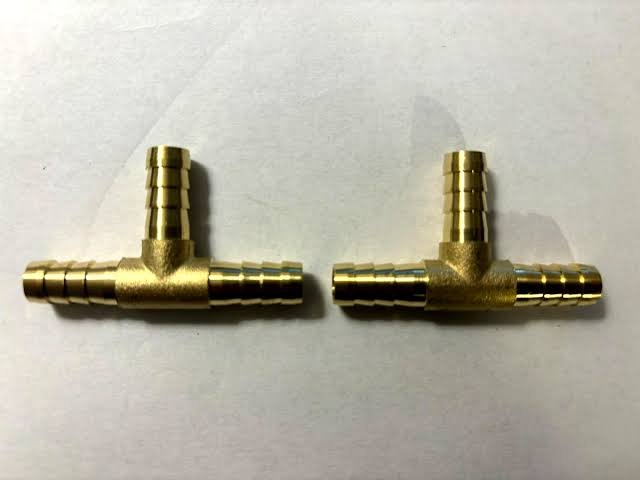
So I was under my old Civic last weekend, trying to figure out why there was a faint smell of gas every time I started her up. Twenty minutes in, flashlight between my teeth, and there it was — a cracked fitting on the fuel line, right where a little brass barb connects to a rubber hose. That small piece of hardware? It was a 5/16 automotive hose barb. And honestly, until that moment, I never gave these things a second thought.
Funny how the smallest parts on a vehicle end up being the ones that keep everything else running safely.
If you’ve landed here because you’re dealing with a leak, a fuel smell, or you’re just trying to figure out what size fitting your car actually needs, you’re in the right spot. Let’s talk through this in plain language — no jargon overload, just real talk about a part that does a lot of quiet, unglamorous work.
What Exactly Is a Hose Barb Anyway?
Picture a small cylindrical fitting with ridges — like tiny rings — running around one end. That ridged end gets pushed into a rubber or synthetic hose, and the ridges “bite” into the inside of the hose so it doesn’t slip off under pressure. The other end usually threads into something else — a fuel pump, a carburetor, a vacuum line, whatever needs connecting.
A 5/16 automotive hose barb specifically fits hoses with a 5/16-inch inner diameter. That’s roughly 8mm if you’re more comfortable thinking in metric. It’s one of the more common sizes you’ll run into on fuel systems, some coolant lines, and various vacuum applications on older and newer vehicles alike.
I used to think all barbs were basically the same, just different sizes. Turns out that’s not quite right — the angle of the ridges, the material, the length of the shank, all of it matters depending on what you’re hooking up.
Why 5/16 Specifically?
This size shows up a lot because it strikes a balance. It’s wide enough to handle decent fuel or fluid flow without restricting things too much, but narrow enough to fit in tight engine bay spaces where every inch counts. A lot of factory fuel lines on smaller engines, plus aftermarket fuel systems, lean toward this size because it just… works for most applications without being overkill.
Where You’ll Actually Find These Fittings
I’ll be honest, before my little gas-smell adventure, I had no idea how many places these barbs show up. Once you start looking, though, you notice them everywhere:
- Fuel lines running from the tank to the pump
- Vacuum lines connecting to intake manifolds
- Some smaller coolant or heater hose connections
- Carburetor fuel inlets on older vehicles
- Aftermarket fuel filter housings
My neighbor, who’s been wrenching on trucks for something like thirty years, told me he replaces these little guys more than almost any other fitting on older vehicles. Rubber degrades, plastic barbs get brittle from heat cycling, and eventually something gives. It’s not usually dramatic — just a slow weep of fuel or a faint hiss of vacuum leaking, and suddenly your idle is rough or your check engine light comes on for no obvious reason.
Brass vs. Plastic vs. Nylon — Does It Matter?
Yeah, it actually does, and I learned this the hard way.
Brass Barbs
Brass is the old reliable option. It handles heat well, doesn’t get brittle over time the way plastic can, and honestly just feels more solid in your hand. If you’re working on a fuel system, especially anything near the engine where temperatures swing, brass is usually the safer bet. It costs a little more, but I’d rather spend the extra few dollars than crawl back under the car in three months.
Plastic and Nylon Barbs
These are lighter and cheaper, and factories love them because they’re cost-effective at scale. Nothing wrong with them when they’re new. The problem is age — sun exposure, engine heat, and just general wear make plastic fittings crack or go brittle. If your car’s fuel line fitting is original and your vehicle is past the ten-year mark, there’s a decent chance that barb is due for a look, if not a replacement.
Stainless Steel Barbs
For anyone building a performance fuel system or dealing with high-pressure applications, stainless steel barbs are worth the investment. They resist corrosion better than brass and hold up under serious pressure. More expensive, sure, but if you’re already spending money on an aftermarket fuel system, this isn’t the place to cut corners.
How to Pick the Right Size (Without Guessing)
Here’s where people mess up more than you’d expect. Hose barbs are sized by the inner diameter of the hose they’re meant for, not the outer diameter of the barb itself. So when someone says “I need a 5/16 automotive hose barb,” they mean it’s built for hose with a 5/16-inch inside opening.
A quick way to check what you actually have: measure the inside diameter of your old hose, or better yet, take the old fitting to a parts store and match it physically. Trying to eyeball this from memory rarely goes well — I’ve done it, and I ended up buying the wrong size twice before getting it right.
Thread Size Matters Too
Don’t just focus on the hose side. The threaded end needs to match whatever it’s screwing into — could be NPT, could be a metric thread, could be a proprietary fitting depending on the manufacturer. Mixing this up is probably the most common mistake I see mentioned in forums and from guys at the parts counter.
Installing a 5/16 Hose Barb the Right Way
This isn’t rocket science, but there’s a right way and a “why is this still leaking” way.
- Cut the hose cleanly. A ragged cut won’t seat properly against the barb ridges.
- Warm the hose slightly if it’s stiff — a hair dryer or warm water works fine. Makes it slide on easier without forcing it.
- Push the hose fully onto the barb, past all the ridges, not just the first one.
- Use the right clamp. A worm-gear clamp or a proper fuel-rated clamp, not a random zip tie (yes, I’ve seen people try this).
- Check for leaks after starting the engine, and give it a few minutes before you walk away and assume it’s fine.
Skipping steps here is exactly how you end up with the situation I had — a subtle leak that takes a while to notice but isn’t something you want to ignore.
Signs Your Hose Barb Fitting Needs Attention
- A faint fuel smell, especially after the car’s been sitting
- Rough idle or unexplained vacuum leaks
- Visible cracking or white, chalky discoloration on plastic fittings
- Wet spots or staining near hose connections under the hood
- A hose that feels loose or wiggles at the connection point
None of these scream “emergency” right away, and that’s honestly what makes them dangerous. A slow fuel leak near a hot engine is not something to put off.
A Little Backstory on Why These Fittings Even Exist
I got curious after that Civic incident and ended up down a rabbit hole reading about fitting standards one night when I probably should’ve been sleeping. Turns out hose barbs have been around in some form since way before modern fuel injection systems existed. Back when everything was carbureted and mechanical, engineers needed a cheap, reliable way to connect rubber lines without welding or soldering every single joint. A ridged metal or plastic nub that you just push a hose onto? Simple, cheap, and it works. That basic idea never really went away, it just got refined.
What’s kind of wild is that the 5/16 size specifically became a go-to because it matched up so well with common fuel pump outputs and carburetor inlets from decades ago. Manufacturers standardized around it, aftermarket companies followed suit, and now here we are — it’s still one of the most stocked sizes at any auto parts counter you’ll walk into.
Common Mistakes People Make With These Fittings
I’ve made a couple of these myself, so no judgment here. But it helps to know what trips people up.
Buying the Wrong Material for the Job
Grabbing a plastic barb because it’s cheaper, then using it somewhere that sees constant heat cycling — that’s asking for trouble. I did exactly this once on a return fuel line near the exhaust manifold. Lasted maybe eight months before it cracked. Should’ve spent the extra two bucks on brass from the start.
Overtightening the Clamp
You’d think tighter is always better, right? Not with these. Crank a hose clamp down too hard and you can actually deform the hose material right at the barb, which weakens it over time and sometimes causes a slow leak right where you were trying to prevent one. There’s a sweet spot — snug enough that the hose can’t move, not so tight you’re crushing it.
Reusing an Old Hose on a New Barb
Hoses stretch and deform over years of use. Even if the hose looks fine on the outside, the inner diameter might have widened just enough that it doesn’t grip a new barb the way it should. If you’re already replacing the fitting, it’s usually worth replacing a few inches of hose too. Cheap insurance, honestly.
Ignoring Thread Compatibility
Mentioned this earlier, but it deserves repeating because I still see people mix this up constantly on forums. NPT threads and metric threads look close enough that you might force one into the other and think it’s fine. It’s not fine. You’ll get a fitting that seems tight but isn’t actually sealing correctly, and that’s how slow leaks start.
DIY Replacement vs. Taking It to a Shop
Honestly? Swapping a 5/16 automotive hose barb is one of those jobs that sits right on the edge between “I can do this myself” and “maybe I should just pay someone.” Depends a lot on where the fitting is located.
If it’s an easily accessible vacuum line or a coolant hose barb sitting right up top where you can see it, go for it. Takes maybe fifteen minutes, a few basic tools, and the part itself usually runs a couple dollars.
But if we’re talking about a fuel line fitting buried deep in the engine bay, or worse, one near the fuel tank itself, I’d think twice. Fuel systems carry real risk if something’s not sealed properly, and a shop has the tools and experience to pressure-test the system afterward to make sure there’s no leak before you’re back on the road. I’m not saying you can’t do it — plenty of people do — just weigh the location and the consequences of getting it wrong.
My own rule of thumb these days: anything I can reach without pulling other parts off first, I’ll tackle myself. Anything requiring me to drop a fuel tank or remove an intake manifold, that’s shop territory for me.
What These Fittings Cost (So You’re Not Surprised)
This part surprised me the first time I bought one — these things are cheap. A basic brass 5/16 hose barb typically runs somewhere between two and six dollars depending on where you buy it and whether it’s a straight fitting or has an angle built in. Stainless steel versions cost more, sometimes in the ten to fifteen dollar range for higher-end performance applications.
Compare that to what happens if you ignore a failing one — a fuel leak that damages surrounding components, or worse, an actual engine bay fire risk — and it’s honestly one of the best value repairs you can make on a vehicle. I tell people this all the time: this is not the part to skimp on or put off because of cost. It’s not expensive to begin with.
Straight, Elbow, and T-Fitting Barbs — What’s the Difference?
Something I didn’t fully appreciate until I started shopping for replacements is that these barbs don’t all come in the same shape.
Straight barbs are exactly what they sound like — a fitting that goes in one direction, hose on one end, thread or connection on the other. Most common, most straightforward to install.
Elbow barbs bend at an angle, usually 90 degrees, sometimes 45. These come in handy when space is tight and running a hose in a straight line would mean bending it sharply, which can kink it and restrict flow. I used an elbow barb on a vacuum line last year specifically because the straight version had the hose bending back on itself in a way that looked like it’d pinch shut eventually.
T-fitting barbs split one line into two, useful for vacuum systems where you need to feed multiple components off a single source line. Less common on fuel systems, more common on vacuum and emissions setups.
Picking the right shape isn’t just about looks or convenience — a kinked hose because you used a straight fitting where an elbow was needed can restrict flow enough to cause real performance issues, especially on vacuum lines where even small restrictions throw off engine sensors.
A Quick Word on Aftermarket Fuel Systems
If you’re building or upgrading a fuel system — say, moving to a bigger pump or adding an aftermarket fuel filter — you’ll run into decisions about barb size more than once. A lot of performance builds actually move away from 5/16 toward 3/8 inch lines for higher flow, especially on modified or turbocharged engines. But plenty of stock and mild-performance setups stick with 5/16 because it’s more than sufficient for the fuel demands of a naturally aspirated or lightly modified engine.
I asked a guy at a local performance shop about this once, and he put it simply: “Don’t upsize your fittings unless your fuel demand actually calls for it. Bigger isn’t automatically better, it just means more parts to buy and match up.” That stuck with me. There’s a temptation to go bigger because it feels like an upgrade, but a properly sized 5/16 automotive hose barb on a stock-ish engine setup is going to do the job just fine without added cost or complexity.
Maintenance Tips to Make These Fittings Last Longer
- Keep an eye on heat exposure. If a hose barb sits near an exhaust manifold or turbo, consider heat-shielding the hose itself, not just the fitting.
- Inspect during routine service. Oil changes are a natural time to glance at hose connections while you’re already under the hood.
- Replace hose and barb together when one fails. Don’t just swap the cracked plastic barb and leave the old, stretched-out hose in place.
- Avoid over-tightening clamps, as mentioned earlier — snug, not crushing.
- Store spare hoses properly if you keep extras around. UV exposure and heat degrade rubber even when it’s just sitting on a shelf.
None of this is complicated stuff, but it’s the kind of small maintenance habit that saves you from crawling under your car on a Saturday trying to figure out why it smells like a gas station in there.
Final Thoughts
It’s funny how something as small as a 5/16 automotive hose barb can end up being the reason your car runs rough, smells like gas, or throws a random code. These fittings don’t ask for attention until they fail, and by then you’re usually dealing with a bigger mess than if you’d just checked them during routine maintenance.
Next time you’re under the hood for an oil change or just poking around, take thirty seconds to look at your hose connections. Cracked, brittle, or crusty fittings are cheap to replace and expensive to ignore. Trust me on that one — I learned it with my nose before I learned it with my eyes.
FAQs
Is a 5/16 hose barb the same as a 5/16 hose fitting?
Pretty much, yeah. People use “barb” and “fitting” interchangeably a lot of the time, though technically a barb refers specifically to the ridged part that grips the hose.
Can I use a 5/16 barb on a slightly different size hose?
You can try, but I wouldn’t recommend it long-term. Even a small mismatch can cause leaks or a hose that pops off under pressure. Better to match it exactly.
Do I need a special tool to install one?
Not really — a sharp utility knife for cutting the hose, a screwdriver or nut driver for the clamp, and maybe a heat gun or hair dryer for stubborn hoses. That’s about it.
How often should these fittings be replaced?
There’s no strict timeline, honestly. It depends on material and where it’s located. Plastic ones near heat sources might need checking every few years, while brass fittings can last a decade or more without issue.
Is it safe to drive with a leaking fuel line fitting?
No, not really. Fuel leaks near a hot engine are a real fire risk. If you smell gas or see staining near a fitting, get it looked at before driving much further.
Read More Blogs: techaspires
