

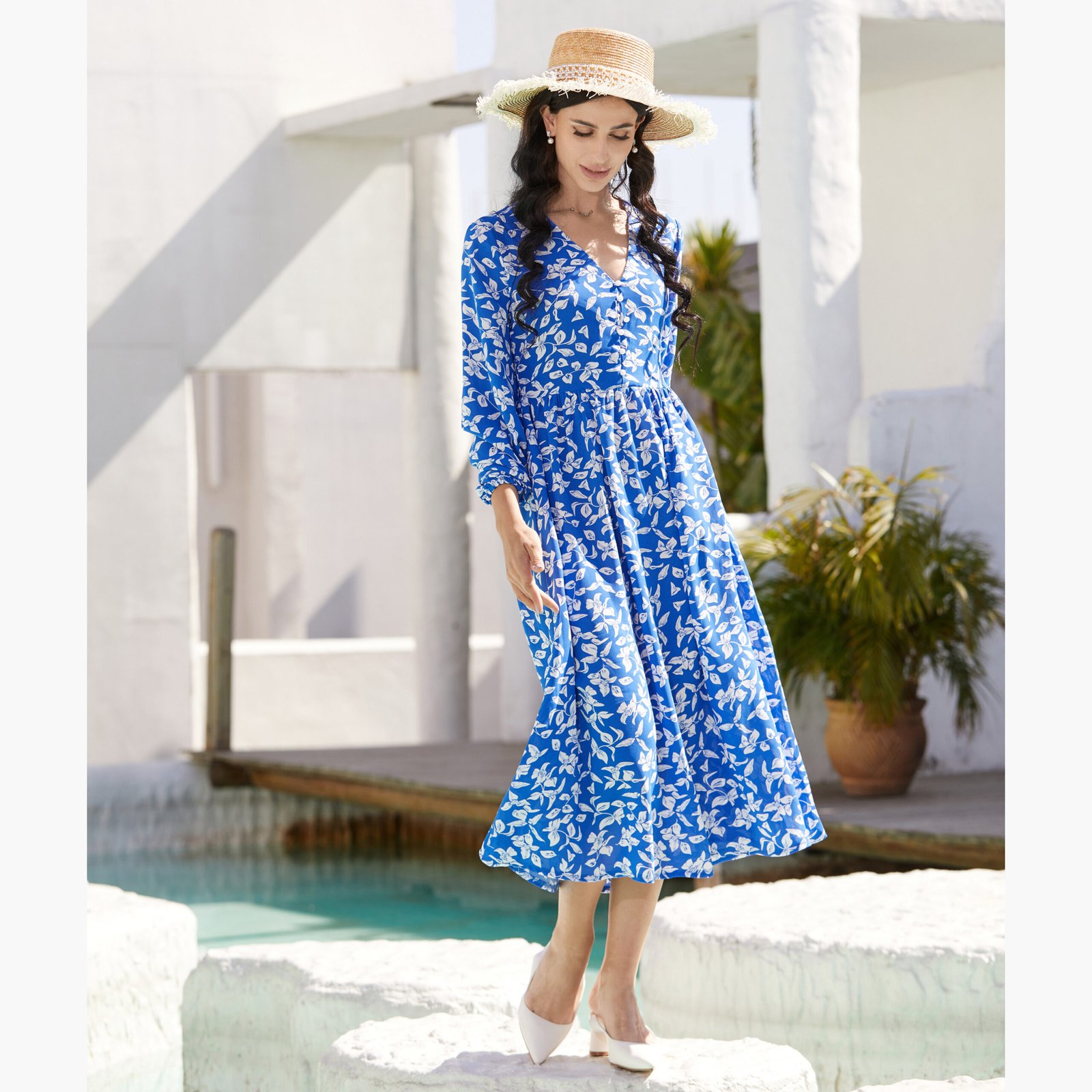
I still remember the first time I tried on a blue dress with flower prints at a small boutique — the kind of place where the lighting is too flattering and you end up buying something you didn’t plan to. I wasn’t even looking for florals that day. I wanted something plain, safe, forgettable. But the moment I saw the soft floral pattern scattered across that deep blue fabric, it just felt… right for almost everything. A brunch. A wedding. Even a random Tuesday when I wanted to feel a little more put together than usual.
That’s the thing about this style. It sounds simple on paper, but the way it shows up in real closets — real occasions — is a lot more layered than people expect.
Quick Answer (For Those in a Hurry)
A blue dress with flower print is a floral-patterned dress in shades of blue — ranging from navy and cobalt to sky and denim tones — designed for versatility across casual, semi-formal, and formal settings. It works well because blue is a universally flattering base color, and floral patterns add texture and personality without looking overly bold. It suits most body types and skin tones, is easy to accessorize, and is one of the most repeat-purchased dress styles in both fast fashion and boutique collections.
If you want one takeaway: it’s a low-risk, high-reward style choice, but the quality of fabric and print placement matters far more than the color itself.
What Is a Blue Dress With Flower, Really?
At its core, this isn’t a single design — it’s a category. It includes:
- Floral maxi dresses in navy or royal blue
- Fit-and-flare dresses with small ditsy floral prints
- Wrap dresses with bold, oversized blue florals
- Midi dresses with embroidered flower detailing
- Sundresses with pastel blue floral patterns
The common thread is the pairing: blue as the dominant or base tone, flowers as the visual interest. Some versions use printed fabric, others use embroidery, appliqué, or even 3D floral fabric texture (common in bridal-adjacent or occasion wear).
Fashion retailers often use “blue dress with flower” as a search term interchangeably with “floral blue dress,” and both usually pull up similar results — which tells you something about how people actually shop for this: they’re not picky about wording, they just want to see options.
How It Works (Styling Logic, Not Just Fabric)
This might sound overly analytical for a dress, but there’s real logic behind why this combination works so consistently.
Blue, especially in mid-to-dark shades, is a cool-toned neutral. It doesn’t compete with skin tone the way certain warm colors do. When you add floral prints on top, you’re layering texture without adding another competing color family — most floral prints on blue dresses use white, yellow, pink, or green accents, which read as complementary rather than clashing.
That’s why stylists frequently recommend florals-on-blue as a safer entry point for people who feel nervous about patterned clothing. You get personality without visual chaos.
Main Features to Look For
Not all blue floral dresses are created equal. Here’s what actually separates a good one from a forgettable one:
- Fabric weight — lightweight cotton or rayon blends drape better for summer; heavier crepe or satin works for evening occasions
- Print scale — small ditsy prints look classic and are easier to dress up; large-scale florals are bolder and more statement-driven
- Silhouette — wrap and fit-and-flare styles tend to flatter the widest range of body shapes
- Sleeve style — puff sleeves and cap sleeves are trending in 2025–2026 floral collections, while sleeveless remains a warm-weather staple
- Lining — a full lining matters more than people think, especially with lighter fabrics that can be sheer under bright light
Honestly, print scale is the detail most people overlook, and it’s the one that determines whether a dress looks “elegant” or slightly costume-like in photos.
Pros and Cons
Pros:
- Extremely versatile across seasons and occasions
- Flattering on most skin tones due to blue’s cool undertone
- Easy to accessorize (gold or silver both work)
- Widely available at multiple price points
- Photographs well — blue florals tend to look good both indoors and outdoors
Cons:
- Print quality varies wildly between brands — some prints look printed rather than designed
- Cheaper fabrics can pill or fade after a few washes
- Bold, oversized florals can feel overwhelming on smaller frames
- Sizing inconsistency is common, especially with dresses imported from overseas manufacturers
- Not always office-appropriate if the print or cut leans too casual
Real-World Scenarios Where This Actually Gets Worn
A few situations where I’ve noticed this style genuinely earns its place in a wardrobe:
- Wedding guest attire — navy floral midi dresses are one of the most searched wedding-guest outfit categories, mostly because they avoid the “too casual” and “too bridal” extremes
- Work-to-dinner transitions — a structured blue floral wrap dress with a blazer over it works for office, then removes easily for evening plans
- Vacation or resort wear — lighter cotton versions in sky blue with tropical florals are common in beach destinations
- Baby showers and garden parties — softer pastel blue florals fit the aesthetic almost by default at this point
I’ve also seen this style show up a lot in maternity wear, since the flowing silhouettes and forgiving prints work well for changing body shapes.
Safety, Legitimacy, and Buying Concerns
Since a lot of these dresses are bought online, a few practical concerns come up repeatedly:
- Fabric safety — cheaper synthetic prints occasionally use dyes that aren’t skin-friendly for sensitive skin; checking for OEKO-TEX or similar certification helps if you have sensitivities
- Sizing legitimacy — many overseas sellers use different sizing charts than what’s listed; always check the actual measurement chart, not just the size label
- Seller trustworthiness — reviews with actual photos (not just star ratings) are the most reliable signal before buying from a smaller or unfamiliar brand
- Return policy clarity — this matters more for floral prints than solid colors, since color accuracy on screens varies more with patterned fabric
There’s nothing inherently risky about the dress itself — it’s a standard garment category. The real risk is buying from unclear sellers without checking sizing and material details first.
Common Problems People Run Into
- Ordering online and receiving a print placement that looks different from the product photo
- Florals fading faster than expected after repeated washing
- Fit issues around the waist or bust with wrap-style florals, especially with cheaper fabric that doesn’t hold structure
- Static cling with certain polyester-blend floral fabrics
None of these are dealbreakers, but they’re worth knowing before you order, especially for a first-time purchase from a brand you haven’t tried before.
How It Compares to Alternatives
If you’re torn between a blue floral dress and other options:
- Solid blue dress — safer, more formal, but less personality
- Red or yellow floral dress — bolder, harder to match with accessories, more season-specific
- Neutral floral (beige/white base) — softer look, but shows stains and wrinkles more easily
- Black floral dress — more dramatic, tends to skew evening-wear rather than daytime versatile
Blue florals sit in a comfortable middle ground — expressive enough to feel intentional, neutral enough to wear often.
Practical, Experience-Based Opinion
If I’m being honest, most of the disappointment I’ve seen with this style comes down to expectations around fabric quality at low price points. A $25 floral blue dress and a $90 one from a mid-range brand can look almost identical in photos, but the difference shows up after two or three washes — pilling, fading, seams pulling.
My practical take: this style is worth investing slightly more in if you plan to wear it often, especially for events. For occasional or one-time wear, a budget option is perfectly reasonable.
Final Verdict
A blue dress with flower print earns its popularity honestly. It’s not a trend that’s going to disappear next season — it’s more of a wardrobe staple that keeps reappearing across collections because the color-pattern combination genuinely works for most people, most occasions, most of the year.
It’s not risk-free — sizing, fabric quality, and seller reliability are real considerations — but the core style itself is a safe, flattering, and useful addition to a wardrobe rather than a passing fad.
Read More Blogs: weight-loss-bundles-australia
FAQs
Q: What skin tones does a blue dress with flower suit best?
A: Most skin tones, actually. Cooler blues (navy, cobalt) tend to suit fair and olive skin tones especially well, while warmer blues (denim, periwinkle) tend to complement deeper skin tones nicely too. It’s one of the more universally flattering base colors.
Q: Can a blue floral dress be worn to a formal event?
A: Yes, depending on fabric and cut. A structured midi or maxi in crepe or satin with subtle florals can work for semi-formal events; casual cotton versions are better suited to daytime or informal occasions.
Q: How do I know if the floral print quality is good before buying online?
A: Check for close-up product photos, read reviews that mention “print” or “pattern” specifically, and avoid dresses where the print looks blurry or overly saturated in listing photos — that’s often a sign of low print resolution on cheap fabric.
Q: Do blue floral dresses fade quickly?
A: Lower-quality synthetic prints can fade after repeated washing, especially in direct sunlight drying. Washing in cold water and avoiding direct sun drying extends the print’s lifespan noticeably.
Q: Is this style considered timeless or trend-based?
A: It leans timeless. Floral prints on blue have appeared consistently across decades of fashion, with only the silhouette (puff sleeves, wrap styles, maxi lengths) shifting with current trends.
Q: What accessories go best with a blue floral dress?
A: Gold jewelry tends to warm up the look, while silver keeps it cooler and more understated. Neutral or tan footwear works across most occasions; white sneakers work well for casual daytime styling.
