

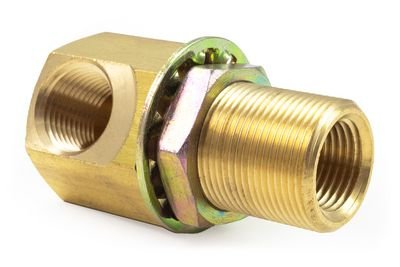
I still remember the first time I watched water pour out of a brand-new rain barrel within an hour of setup — not from the top, but from a sloppy hole someone had drilled into the side to run a hose out. That’s the moment I learned what a bulkhead fitting actually does, and why skipping one is one of the most common (and expensive) mistakes people make with tanks, barrels, and totes.
If you’ve landed here searching for “fitting bulkhead,” you’re probably trying to figure out one of two things: either you’re staring at a tank or container wondering how to get a pipe through the wall without it leaking everywhere, or you’ve seen the term somewhere and want to know if it’s worth buying, how it’s installed, and whether it’s actually reliable. This guide covers all of that.
Quick Answer
A bulkhead fitting (sometimes searched as “fitting bulkhead”) is a two-piece mechanical fitting that creates a watertight, sealed connection through the wall of a tank, barrel, drum, or vessel. It lets you run a pipe or hose in or out of a container without the connection leaking, using a threaded body, a rubber gasket, and a locking nut that clamp down on either side of the wall. They’re used in rainwater harvesting, aquariums, chemical tanks, boats, RVs, and industrial process equipment — basically anywhere liquid needs to exit or enter a container through a solid wall rather than through the top opening.
What Is a Bulkhead Fitting, Exactly?
Think of it as a plumbing pass-through. Instead of drilling a hole and hoping a hose clamp holds things together (spoiler: it usually doesn’t, not under pressure or over time), a bulkhead fitting is purpose-built to seal a hole in a flat or curved surface.
It typically consists of:
- A threaded body that sits on one side of the wall
- A rubber gasket or O-ring that presses against the tank wall to prevent seepage
- A flange or nut that tightens from the opposite side to clamp everything together
- A fitting outlet (threaded, barbed, or slip) where you attach your pipe, valve, or hose
Once tightened, the two halves squeeze the tank wall between them, and the gasket does the actual sealing work. It’s a simple design, but the physics behind it are the same principle used in industrial tank engineering — even though home versions cost a few dollars each.
You’ll also see this called a “tank bulkhead fitting” or “through-hull fitting” depending on the industry. Marine and boat-building communities almost always use “through-hull,” while the rainwater harvesting and aquaculture world tends to stick with “bulkhead fitting.” Same basic function.
How a Bulkhead Fitting Works
Here’s the mechanism broken down step by step, because this is where a lot of people get tripped up on first install:
- A hole is drilled or cut into the tank wall, sized to match the fitting’s thread diameter.
- The threaded body is inserted from inside the tank (in most designs), with the gasket sitting flush against the inner wall.
- From the outside, a locking nut or flange threads onto the body and is tightened by hand or with a wrench.
- As the nut tightens, it compresses the gasket against the wall on both sides, creating a seal.
- The outer end of the fitting — usually threaded NPT, barbed, or slip PVC — is where you connect your actual plumbing: a valve, a hose bib, a bulkhead union, whatever your setup needs.
The seal isn’t glued or welded. It’s purely mechanical compression, which is actually a strength, not a weakness — it means you can disassemble and re-seat it if the gasket wears out, something you can’t do with a bonded fitting.
One thing worth mentioning from experience: over-tightening is a real problem. People assume tighter equals more sealed, but cranking down too hard on a plastic tank wall can crack the material around the hole, especially on thinner IBC totes or older rain barrels that have already been sitting in the sun for a couple of summers.
Main Features to Look For
Not all bulkhead fittings are built the same, and the differences matter more than people expect:
- Material — PVC and polypropylene are common for water and mild chemicals; stainless steel or brass for higher pressure, saltwater, or industrial use.
- Thread type — NPT (National Pipe Thread) is standard in the US; BSP threads show up on imported or European equipment. Mixing the two without adapters is a classic leak source.
- Gasket compound — EPDM rubber handles most water applications fine; Viton is used when chemicals or fuel are involved because EPDM degrades with petroleum-based liquids.
- Flange size and wall thickness rating — fittings are rated for a specific wall thickness range; using one outside that range compromises the seal.
- Straight vs. elbow/angled fittings — some setups need the outlet angled downward to prevent standing water at the connection point.
Pros and Cons
Pros:
- Creates a genuinely leak-resistant, low-maintenance connection through a tank wall
- Removable and serviceable — you can replace a worn gasket without replacing the whole tank
- Works across a huge range of container types: plastic drums, IBC totes, fiberglass tanks, metal tanks, even glass aquariums with the right variant
- Relatively inexpensive compared to the cost of water damage or a failed tank
Cons:
- Installation requires a precise, correctly sized hole — a slightly oversized or ragged cut ruins the seal
- Not all fittings suit all tank materials; using the wrong gasket compound with certain chemicals causes premature failure
- Can loosen over time with vibration (common in RVs and boats), so periodic re-tightening is genuinely necessary, not optional
- Cheaper fittings with thin gaskets or brittle plastic threads are common on marketplace listings, and they do fail faster than name-brand versions
Real-World Examples and Use Cases
A few scenarios where this actually plays out in daily life:
Rainwater harvesting — Most rain barrel kits sold online include a bulkhead fitting near the bottom for the spigot or overflow hose. This is the exact scenario I mentioned earlier — skip it, drill straight through with a garden hose adapter, and you’ll be re-doing the job within a season.
Aquariums and sump systems — Reef tank hobbyists rely on bulkhead fittings to drain water from the display tank into a sump below. A failed bulkhead here isn’t a minor inconvenience; it can mean gallons of saltwater on the floor and, in bad cases, a dead tank of fish.
IBC tote conversions — People repurposing 275-gallon IBC totes for rainwater storage or off-grid water systems almost always need to add or replace a bulkhead fitting, since factory totes often only have a single ball valve outlet.
RVs and boats — Fresh water tanks, gray water tanks, and through-hull fittings for bilge pumps all use this same basic mechanism, just rated for different pressures and vibration tolerances.
Chemical and industrial tanks — Fertilizer tanks, IBC-based chemical mixing setups, and small-scale industrial vats use bulkhead fittings rated specifically for the chemical compatibility of what’s inside — this is not a place to improvise with generic hardware store parts.
Safety, Legitimacy, and Reliability
Is a bulkhead fitting “legit”? Yes — it’s a well-established, decades-old piece of standard plumbing and industrial hardware, not a gimmick or trend product. You’ll find them stocked by legitimate industrial suppliers, marine hardware stores, and agricultural supply companies, not just random online marketplaces.
That said, a few real safety points matter:
- Chemical compatibility isn’t optional. Using an EPDM-gasketed fitting with gasoline, diesel, or strong acids will degrade the gasket and cause leaks or contamination. Check a compatibility chart before buying, especially for anything beyond plain water.
- Pressure rating matters. A fitting designed for gravity-fed rainwater isn’t rated for a pressurized system. Don’t assume all bulkhead fittings are interchangeable across applications.
- Installation quality determines safety more than the fitting itself. Most failures I’ve seen traced back to a bad hole cut, missing gasket alignment, or skipped thread sealant — not a defective part.
- For anything holding hazardous liquids, buy from a supplier who can provide a spec sheet, not an unbranded listing with no material data.
Common Problems and Limitations
- Slow weeping leaks — usually from an under-tightened nut or a gasket that’s aged and lost its compression.
- Cracked tank wall around the fitting — from over-tightening or using a fitting rated for a different wall thickness.
- Thread mismatch leaks — mixing NPT and BSP fittings without proper adapters or tape.
- Vibration loosening — common in mobile applications like RVs; needs periodic inspection, not a “set and forget” mindset.
- UV degradation — plastic bulkhead fittings exposed to direct sunlight for years (common on outdoor rain barrels) become brittle and can crack.
Bulkhead Fitting vs. Alternatives
| Method | Leak Resistance | Serviceability | Best For |
|---|---|---|---|
| Bulkhead fitting | High | Easy to disassemble/replace | Tanks, drums, totes, aquariums |
| Hose clamp through drilled hole | Low | Poor, tends to degrade quickly | Temporary, low-stakes setups only |
| Welded/bonded fitting | Very high | Not serviceable once installed | Permanent industrial installs |
| Grommet + barbed fitting | Moderate | Easy but less durable | Low-pressure, short-term use |
For anything you want to last more than a season or hold anything beyond plain water, a proper bulkhead fitting is worth the extra few dollars over an improvised hose-clamp setup.
An Honest, Practical Opinion
Having dealt with a few of these installs myself, here’s the blunt take: bulkhead fittings are unglamorous, genuinely useful hardware. They’re not high-tech, they’re not trending on social media for any real reason, and they don’t need to be. The main risk isn’t the product category — it’s buying a cheap, unbranded version with a stiff plastic gasket that never seals properly, or rushing the hole-cutting step.
If you’re setting one up for the first time, spend the extra time getting the hole diameter exact, use plumber’s thread tape on any threaded connections, and don’t crank the nut down with a pipe wrench “just to be safe.” Hand-tight plus a quarter turn with a wrench is usually enough on plastic tanks.
Final Verdict
A bulkhead fitting is a legitimate, well-proven solution for passing plumbing through a tank wall, and it’s the correct tool for the job in almost every case where a hose or pipe needs to exit a container below the fill line. It’s not a scam, not overhyped, and not something you need to be suspicious of — it’s standard hardware used across plumbing, marine, aquarium, and industrial fields. The main thing that determines whether it works well for you is installation care and choosing the right material and gasket for what’s actually going through it.
Read More new blogs: Finland Startup News
FAQs
Q: What’s the difference between a bulkhead fitting and a regular pipe fitting?
A: A regular pipe fitting connects two pipes together. A bulkhead fitting is specifically designed to pass through a flat wall or tank surface and seal against that wall, which a standard pipe fitting isn’t built to do.
Q: Can I install a bulkhead fitting myself without professional help?
A: In most residential cases — rain barrels, aquariums, IBC totes — yes, it’s a DIY-friendly job as long as you cut the hole to the correct diameter and follow the manufacturer’s torque guidance. Industrial or pressurized chemical tanks are a different story and often warrant professional installation.
Q: Do bulkhead fittings work on curved tank walls, like drums or cylindrical tanks?
A: Yes, most are designed with a flat gasket face that can seal reasonably well on gently curved surfaces, though very tight curves (like small-diameter pipe) may need a specialized fitting rather than a standard flat bulkhead.
Q: How long do bulkhead fittings typically last?
A: A quality fitting installed correctly can last many years, often the lifespan of the tank itself. UV exposure, chemical incompatibility, and repeated vibration are the main things that shorten that lifespan.
Q: Are plastic bulkhead fittings as reliable as metal ones?
A: For water and mild liquids, PVC or polypropylene fittings are perfectly reliable and are actually preferred in many applications because they won’t corrode. Metal fittings become necessary for higher pressure, higher temperature, or specific chemical resistance needs.
Q: Why is my bulkhead fitting leaking even though it’s tightened?
A: The most common causes are a gasket that’s aged or wasn’t seated evenly, a cracked tank wall around the hole, or a mismatch between the fitting’s rated wall thickness and your actual tank wall. Check the gasket first — it’s the cheapest and most likely fix.
