

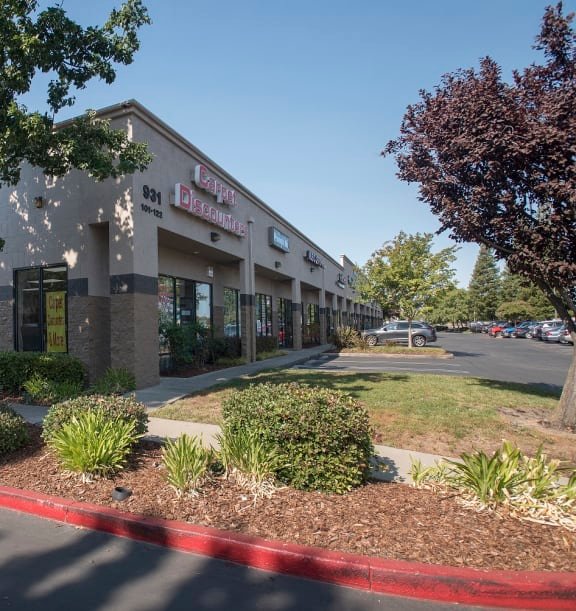
You’ve probably typed “business parks near me” into Google right before a client meeting, or while scouting office space for a growing team, and gotten a map full of pins with names like “Corporate Center” or “Tech Business Park” that all sort of blur together.
That confusion is normal. Business parks look similar from the outside, but the differences between them — lease terms, amenities, tenant mix, even parking rules — can make or break whether one actually works for your business.
This guide breaks down what a business park actually is, how leasing and operations work inside one, and how to judge whether a specific park is worth visiting versus scrolling past.
Quick Answer
A business park is a designated area, usually on the edge of a city or in a suburban zone, that’s purpose-built to host multiple businesses — offices, light industrial units, warehouses, or a mix — under shared infrastructure like roads, parking, security, and sometimes shared amenities such as cafes or conference facilities. To find one near you, search Google Maps or a commercial real estate site like LoopNet or CommercialCafe using your city name, since actual listings and availability are location-specific and change often.
What Is a Business Park, Exactly?
Not every office building cluster counts as a business park. The term usually refers to a planned development with a few defining traits:
- Multiple tenants sharing a single zoned property or campus
- Shared infrastructure — roads, utilities, landscaping, sometimes security
- A mix of building types: standalone offices, multi-tenant office buildings, light industrial or flex space, occasionally retail
- Professional management, either by a landlord company or a property management firm
Some are single-story suburban campuses with a lot of green space — think landscaped lawns, a pond, walking paths. Others are dense, multi-building complexes closer to industrial parks, with warehouses next to office suites.
The phrase “near me” tells search engines you want local, mappable results — not a general explanation. Google, and increasingly AI Overviews, respond to that by pulling map listings first, then reviews and directions. Worth knowing if you’re the one searching, since the best answer to your exact query usually lives in Maps rather than in any article, including this one.
How Business Parks Actually Work
Ownership and management. Most business parks are owned by a single developer or real estate investment trust (REIT), then leased out to individual tenants. A management company usually handles maintenance, security, and shared amenities.
Leasing structure. Units typically lease on a per-square-foot basis, often with triple net (NNN) terms — meaning tenants pay a base rent plus a share of property taxes, insurance, and common area maintenance. This trips up a lot of first-time renters who see a low base rate and don’t account for the added costs.
Tenant mix. Parks vary a lot here. Some cater specifically to tech and professional services firms. Others are built for logistics, manufacturing, or a blend of industrial and office use. It matters — a design agency sharing a park with a distribution warehouse means different traffic patterns, noise levels, and parking demand than an all-office campus.
Amenities and shared space. Newer or higher-end parks increasingly include shared conference centers, fitness facilities, food courts, EV charging, and sometimes on-site childcare. Older parks may offer little beyond parking and landscaping.
Main Features to Look For
When comparing business parks, these are the features that actually affect day-to-day operations:
- Location and commute access — proximity to highways, public transit, and airports
- Parking ratio — spaces per 1,000 square feet leased; too low a ratio causes real daily friction
- Building class — Class A, B, or C designations affect rent, finish quality, and prestige
- Zoning flexibility — whether the space allows for future expansion or mixed use
- Security infrastructure — gated access, on-site security staff, cameras
- Shared amenities — meeting rooms, cafes, fitness centers, EV chargers
- Lease flexibility — term length, renewal options, expansion clauses
Pros and Cons
Pros:
- Professional, business-appropriate address without the overhead of owning property
- Shared infrastructure reduces individual maintenance burden
- Networking proximity — being near other companies sometimes leads to genuine partnerships or referrals
- Often better parking and access than dense downtown cores
- Scalable options if the same landlord manages multiple buildings in the park
Cons:
- Suburban business parks can mean longer commutes for employees relying on public transit
- Shared costs (NNN charges) can make total occupancy cost less predictable than a flat lease
- Limited walkability — few parks have nearby restaurants or services within walking distance
- Tenant mix isn’t always controllable; a noisy or high-traffic neighbor can affect daily operations
- Some older parks have outdated infrastructure despite modern-sounding names
Real-World Scenarios
A small accounting firm I know moved from a downtown high-rise into a suburban business park mainly to cut overhead. The savings were real — rent dropped by close to a third. But it took almost six months for staff to adjust to the commute change, and a couple of employees who relied on transit ended up leaving. That’s a fairly common trade-off: lower cost, less central location.
On the flip side, a logistics startup searching “business parks near me” specifically wanted proximity to a highway interchange for delivery routing. For them, a park fifteen minutes further from downtown but three minutes from the highway on-ramp was clearly the better call — appearance and prestige didn’t matter nearly as much as drive time.
These examples matter because “best” really depends on what your business actually needs day to day, not just what looks good on a map.
Safety, Legitimacy, and What to Watch For
Business parks themselves are a completely standard, legitimate form of commercial real estate — there’s nothing inherently risky about the concept. That said, a few practical cautions apply when searching and leasing:
- Verify listings independently. Third-party sites sometimes show outdated availability or pricing. Confirm directly with the property management company or a licensed commercial broker before assuming a listing is current.
- Check zoning and permitted use. Make sure your specific business type is actually permitted in that zone — this catches people off guard more often than expected.
- Read the NNN charges carefully. Ask for a full breakdown of common area maintenance fees before signing anything based on base rent alone.
- Confirm security arrangements, especially for after-hours or 24/7 operations, since coverage varies widely between parks.
- Be wary of unusually low rates with no clear reason — sometimes it reflects a real issue like poor maintenance, high vacancy, or an upcoming redevelopment that could disrupt tenants.
None of this means business parks are risky in general. It just means, like any commercial lease, the details matter more than the headline number.
Common Problems and Limitations
- Vague search results. “Near me” searches sometimes surface parks that are technically nearby but poorly suited to your industry or size needs.
- Inconsistent amenity quality. Marketing materials can oversell shared facilities that are outdated or under-maintained.
- Limited public transit access in many suburban parks, which affects hiring pools.
- Long-term lease lock-in without enough flexibility for fast-growing or shrinking businesses.
- Uneven tenant experience — one building in a park might be excellent, while another nearby is neglected.
Business Parks vs. Alternatives
| Option | Best for | Trade-off |
| Business park | Growing companies needing scalable, professional space | Often suburban, commute-dependent |
| Downtown office tower | Client-facing businesses needing prestige and walkability | Higher cost, limited parking |
| Coworking space | Startups, freelancers, small teams | Less privacy, less control over layout |
| Standalone commercial property | Businesses wanting full control and branding | Full maintenance and management responsibility |
Practical Opinion
If I had to give one honest piece of advice here, it’s this: don’t choose based on the map pin alone. Visit in person, ideally during a normal weekday, and pay attention to things a listing photo won’t show — how full the parking lot actually is, whether the shared spaces look maintained, and how the traffic flows in and out during peak hours.
A lot of businesses pick a park purely on proximity and price, then discover six months in that the commute is killing employee retention or that the shared conference room is booked solid every time they need it. A short site visit usually reveals more than an hour of online comparison.
Final Verdict
Business parks remain a solid, legitimate option for companies that want a professional space without the cost and commitment of owning property outright. The concept works well — the details of any individual park are what determine whether it’s genuinely a good fit. Since results for “near me” searches are entirely location-dependent, the best move is combining a quick map search with an actual in-person visit before committing to anything.
Explore more insights: Techaspires
FAQs
Q: How do I find business parks near me?
A: Search Google Maps directly, or use commercial real estate platforms like LoopNet, CommercialCafe, or a local commercial broker, since availability changes frequently and general search engines may show outdated listings.
Q: Are business parks only for offices?
A: No. Many combine office, light industrial, warehouse, and occasionally retail space within the same development.
Q: What’s the difference between a business park and an industrial park?
A: Business parks typically emphasize office and professional space with landscaped, campus-style settings. Industrial parks focus more on warehousing, manufacturing, and logistics, often with fewer aesthetic amenities.
Q: Is renting in a business park cheaper than downtown office space?
A: Usually, yes, though total cost depends on NNN charges, commute-related hiring impact, and lease terms — not just the base rent per square foot.
Q: What should I check before signing a lease in a business park?
A: Zoning permissions, full breakdown of common area maintenance fees, parking ratio, security coverage, and lease flexibility for future growth or downsizing.
Q: Do business parks have public transit access?
A: It varies significantly. Many suburban parks have limited transit access, so check specific routes and stops before assuming commute feasibility for your team.
