

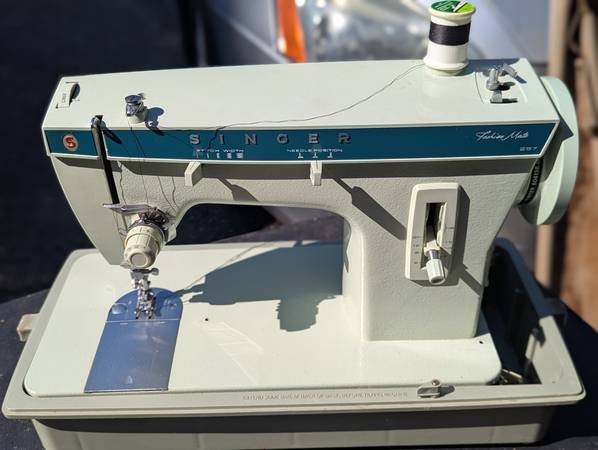
A few years back, my neighbor asked me to help her pick a sewing machine for her daughter’s college move. She wanted something cheap, something that wouldn’t jam every five minutes, and something a total beginner wouldn’t cry over. We ended up at a local craft store staring at a wall of machines, and one name kept popping up over and over — Singer Fashion Mate.
If you’ve landed here after typing that same phrase into Google, you’re probably going through something similar. Maybe you’re shopping for your first machine. Maybe someone recommended it and you want to know if it’s legit before you spend your money. Either way, let’s actually dig into it instead of just repeating marketing copy.
Quick Answer (For Those in a Hurry)
The singer fashion mate is a line of entry-level to mid-range home sewing machines made by Singer, one of the oldest and most established sewing machine brands in the world. It’s built mainly for beginners, hobbyists, and casual sewers who want to handle basic mending, clothing alterations, and small craft projects without a steep learning curve. It’s a legitimate, widely sold product — not a scam or a gimmick — though it’s not designed for heavy commercial or industrial use.
What Is the Singer Fashion Mate, Exactly?
Fashion Mate isn’t a single machine — it’s a product family that Singer has kept alive across multiple generations, with models like the Fashion Mate 3342 and the newer Fashion Mate 5560 being the most common ones you’ll find on shelves today. Singer itself has been around since 1851, and it’s credited with several sewing innovations over the decades, including the first practical sewing machine and later the first zig-zag machine.
So when you see “Fashion Mate” attached to a product, you’re not looking at some no-name brand trying to cash in on SEO traffic. It’s a real, established line sold through major retailers, Singer’s own website, and craft chains.
The name itself is a hint about who it’s for — people who want to sew clothing, alter fashion pieces, patch things up, or dabble in home décor projects, without needing an industrial-grade setup.
How Does It Work?
At its core, a Fashion Mate machine works like any standard home sewing machine, just tuned for simplicity. You thread the top spool, drop in a bobbin, select a stitch, and start sewing. What makes it approachable for beginners is how much of the fiddly setup has been simplified.
Here’s a rough walkthrough of the process:
- Threading — most models come pre-threaded out of the box, and many include an automatic needle threader so you’re not squinting to poke thread through a tiny eye.
- Bobbin loading — the top drop-in bobbin system means you can see the bobbin as it unwinds, which helps you catch thread issues before they turn into a tangled mess.
- Stitch selection — you turn a dial (on mechanical models like the 3342) or use buttons and an LCD screen (on the 5560) to pick your stitch type.
- Buttonholes — instead of manually eyeballing buttonhole size, you place the button into a special foot, and the machine sews a matching hole in one step.
- Sewing — foot pedal control, adjustable stitch length and width, and that’s really it.
It’s not fancy. It’s not computerized embroidery-level technology. It’s meant to get out of your way so you can actually sew.
Main Features Worth Knowing About
Depending on which Fashion Mate model you’re looking at, features vary a bit, but there’s a common core:
- Multiple built-in stitches — the 3342 offers 32 built-in stitches (110 stitch applications), while the 5560 bumps that up to around 203 stitch applications shown on an LCD screen.
- Heavy-duty metal frame — this isn’t a flimsy plastic shell. The internal frame is metal, which keeps the machine stable and reduces skipped stitches.
- One-step buttonhole — genuinely one of the more useful features for anyone who’s ever fought with a four-step buttonhole process.
- Automatic needle threader — small feature, big quality-of-life improvement, especially if your eyesight isn’t what it used to be.
- Free arm — lets you sew sleeves, cuffs, and pant legs more easily by removing part of the flat sewing surface.
- Included accessory kit — typically comes with a general-purpose foot, zipper foot, buttonhole foot, button-sewing foot, bobbins, needles, and a seam ripper.
- LED lighting — so you’re not squinting at your fabric under a dim work lamp.
- Adjustable stitch length and width — gives you a bit more control for different fabric types, from lightweight cotton to layered denim.
None of this screams “professional tailor’s studio,” and it’s not supposed to. It’s built to cover the 90% of sewing tasks a regular person actually needs.
Pros and Cons
Nothing is perfect, and pretending otherwise would just be dishonest. Here’s how it actually breaks down.
Pros:
- Genuinely beginner-friendly — the learning curve is short
- Backed by a well-known, long-running brand with real customer support and available replacement parts
- Metal internal frame adds durability most budget machines skip
- One-step buttonhole saves real time and frustration
- Reasonably priced compared to mid-tier competitors
- Wide accessory and parts availability, since Singer machines have been around so long
- Portable — light enough to move between rooms or store away
Cons:
- Not built for daily heavy-duty or commercial use
- Plastic components exist alongside the metal frame, so it’s not indestructible
- Limited advanced stitching options compared to higher-end machines
- Some users report the bobbin tension needs manual adjustment out of the box
- No embroidery or computerized pattern memory on most models
- Basic model doesn’t include an automatic thread cutter, which pricier machines often have
If you’re picturing yourself running a small alterations business out of your garage, sewing eight hours a day, this probably isn’t the long-term machine for that. If you’re hemming pants, fixing torn seams, or making the occasional Halloween costume, it’s honestly more than enough.
Real-World Use Cases
Let’s get specific, because vague “it’s great for beginners” statements don’t actually help anyone decide.
Scenario 1: The college student mending situation. This is basically what started this whole article for me. A student living away from home doesn’t need a $900 machine. They need something that can hem jeans, fix a ripped backpack strap, or sew a button back on a jacket. Fashion Mate handles all of that without requiring a manual the size of a phone book.
Scenario 2: The hobbyist crafter. Tote bags, pillow covers, simple quilting squares, tissue holders — that Hawaiian shirt tissue holder tutorial that keeps showing up in Singer’s own content library is a good example of the kind of small, satisfying project this machine is made for.
Scenario 3: Basic clothing alterations. Taking in a waistband, shortening sleeves, replacing a zipper — these are common enough tasks that owning a machine, even a basic one, saves money over paying a tailor every single time.
Scenario 4: A first machine for a teenager or new hobbyist. Because it’s not overly expensive and not overly complicated, it works well as a “let’s see if this hobby sticks” purchase.
Where it starts to struggle is anything involving thick, multi-layer upholstery fabric on a regular basis, or continuous daily use in a small business setting. It can handle denim and heavier fabric occasionally, but that’s not the same as sewing leather jackets eight hours a day.
Is It Safe and Legitimate?
Yes — and this is worth addressing directly since “is this a scam” is clearly part of what people are searching for when they type in a product name plus review-style intent.
Singer is a publicly recognized, long-established manufacturer, and Fashion Mate machines are sold through legitimate, verifiable retailers — Singer’s own site, Amazon, Hobby Lobby, and various electronics and craft stores. There’s a functioning parts and accessories supply chain behind it, which matters more than people realize. A lot of cheap off-brand sewing machines become useless the moment a single part breaks, because there’s no way to source a replacement.
From a physical safety standpoint, it’s a standard consumer sewing machine — same basic precautions apply as with any machine that has a needle moving at speed. Keep fingers clear of the needle area, unplug it before doing maintenance, and don’t let kids operate it unsupervised.
Privacy isn’t really a concern here either, since this is a mechanical/electromechanical device, not a smart appliance collecting data. The companion app Singer offers is more of an optional instructional tool than anything that raises red flags.
Common Problems and Limitations People Run Into
Based on general patterns with entry-level machines like this one, a few recurring complaints show up:
- Tension issues — new users sometimes struggle with thread tension until they get a feel for adjusting it properly. This isn’t unique to Fashion Mate; it’s common across most home machines.
- Bobbin winding hiccups — occasionally the bobbin winder needs a second attempt to catch properly.
- Limited stitch memory — you can’t save custom stitch combinations the way you could on a higher-end computerized machine.
- Noise level — mechanical models tend to be a bit louder than premium quiet-motor machines.
- Not ideal for quilting large projects — the throat space (the area between the needle and the machine body) is on the smaller side, which limits how much you can maneuver bulky quilted fabric.
None of these are dealbreakers for the target user, but they’re worth knowing before you buy, so you’re not surprised later.
How Does It Compare to Alternatives?
If you’re cross-shopping, here’s roughly where Fashion Mate sits:
- Vs. Singer’s own M-series (like the M1000 or M3300): Fashion Mate generally offers more stitch options and a stronger metal frame, while the M-series leans even more budget and stripped-down.
- Vs. Brother entry-level machines: Brother’s beginner machines are a close competitor in price and simplicity, often with similar stitch counts. It really comes down to personal preference and which brand’s dealer network is more accessible to you for servicing.
- Vs. higher-end computerized Singer models: Those offer embroidery capability, larger stitch libraries, and touchscreen controls, but at a noticeably higher price and with a steeper learning curve — overkill for someone just starting out.
If your budget allows and you specifically need embroidery or heavy daily production work, look higher up the lineup. If you want something practical, reliable, and easy to pick up, Fashion Mate stays competitive.
My Honest, Practical Take
Having actually watched someone use one of these machines through a full beginner learning curve, my take is this: it’s not going to blow anyone away with cutting-edge features, and it’s not trying to. What it does well is remove friction. The threading is simple. The buttonhole step actually works the way it’s supposed to. The metal frame means it doesn’t feel like it’s going to rattle apart after a few months of regular use.
Where I’d push back on the marketing a little — some of the promotional language makes it sound like it can handle “anything,” which isn’t quite accurate. It handles most everyday sewing needs well. It’s not the machine for someone planning to sew professionally at volume, and it’s honest to say so upfront rather than let someone find out the hard way after a big purchase.
If someone asked me today whether to buy one for a first machine, I’d say yes, with the expectation that it’s a starting point — a genuinely useful one — not necessarily a forever machine if sewing turns into a serious, ongoing craft or business.
Final Verdict
The singer fashion mate earns its reputation fairly. It’s a legitimate, well-supported, beginner-to-intermediate sewing machine backed by a brand with over a century of history in this exact category. It’s not a scam, it’s not overhyped junk, and it’s not secretly a data-harvesting smart device either — it’s just a solid, no-drama sewing machine.
If you need something for mending, casual crafting, simple alterations, or learning to sew for the first time, it’s a smart, low-risk pick. If you’re running a serious sewing operation or need embroidery-level features, you’ll outgrow it eventually and that’s fine — most people in that category upgrade anyway.
Next More blogs: Keana Taylor Houston Real Estate
FAQs
Q: Is the Singer Fashion Mate good for beginners?
A: Yes. It’s specifically designed with beginners in mind, featuring simple stitch selection, an automatic needle threader, and a one-step buttonhole process that removes most of the guesswork from early sewing projects.
Q: How many stitches does the Singer Fashion Mate have?
A: It depends on the model. The Fashion Mate 3342 has 32 built-in stitches with 110 stitch applications, while the Fashion Mate 5560 offers around 203 stitch applications shown on an LCD display.
Q: Can the Singer Fashion Mate sew through denim or thick fabric?
A: Yes, with the correct needle and settings, it can handle multiple layers of denim and other heavier fabrics for occasional home projects. It’s not built for continuous heavy-duty industrial use, though.
Q: Is Singer Fashion Mate a computerized sewing machine?
A: Not typically. Most Fashion Mate models are mechanical or electromechanical, using dials or basic button controls rather than full touchscreen computerized systems found on premium machines.
Q: What accessories come included with the Singer Fashion Mate?
A: Most versions include a general-purpose foot, buttonhole foot, button-sewing foot, zipper foot, bobbins, needles, a seam ripper, and sometimes a bonus Sew Easy foot for straighter seams.
Q: Is the Singer Fashion Mate worth the price?
A: For casual sewers, hobbyists, and beginners, yes — it offers solid build quality and useful features at a reasonable price point compared to many competitors in the same category.
Q: Where can I buy a Singer Fashion Mate sewing machine?
A: It’s available through Singer’s official website, Amazon, Hobby Lobby, Electronic Express, and various other authorized craft and electronics retailers.
Q: Does the Singer Fashion Mate come with a warranty?
A: Singer machines generally include a manufacturer’s warranty, though exact terms vary by model and retailer, so it’s worth checking the specific listing before purchase.
