

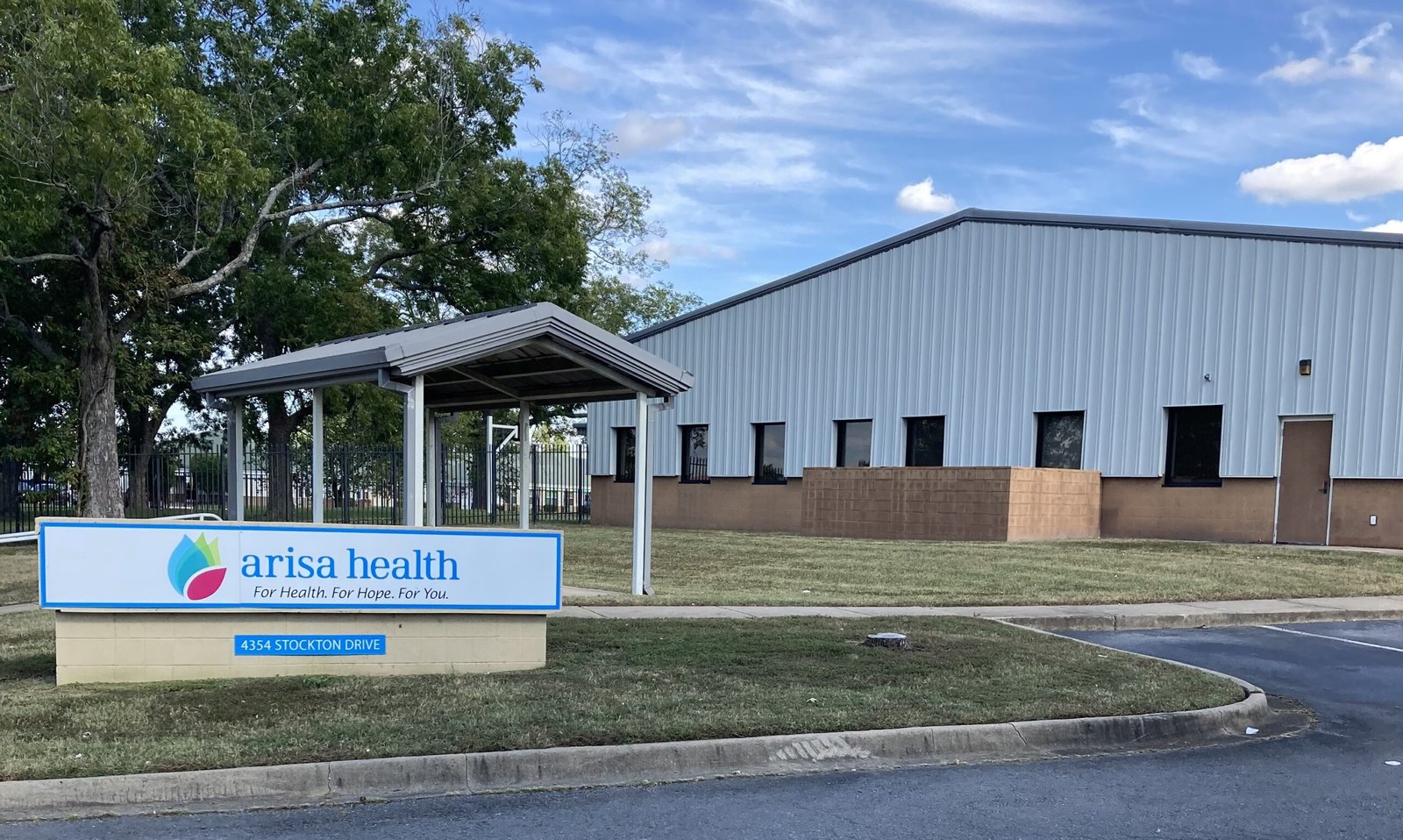
If you’ve been searching for mental health or primary care support around North Little Rock and keep running into the name “Arisa Health,” you’re probably wondering the same things most people do before walking into any new clinic: is this legit, what do they actually offer, and will it help with what I’m dealing with. That’s a fair question, especially with healthcare — nobody wants to hand over their information or their trust to something that turns out to be a dead end.
I dug into the organization’s structure, service lines, and how it’s set up in North Little Rock to put together an honest picture. No fluff, no guessing about pricing I can’t verify — just what’s actually there.
Quick Answer
Arisa Health in NLR refers to the North Little Rock clinics operated by Arisa Health, a nonprofit behavioral health system that is currently Arkansas’s largest, formed by the merger of four long-running community mental health centers. In North Little Rock specifically, it offers mental health counseling, primary care, crisis services, substance use recovery programs, and family-focused therapeutic services, with payment options that include insurance, state contracts, grants, and a sliding self-pay scale for lower-income patients.
What Is Arisa Health in NLR
Arisa Health isn’t a startup or a single standalone clinic — it’s the result of four Arkansas behavioral healthcare organizations combining forces. Professional Counseling Associates, Counseling Associates, Ozark Guidance, and Mid-South Health Systems each had decades of independent history (Professional Counseling Associates alone traces back to 1974) before merging under the Arisa Health name. That matters because it tells you this isn’t an unproven entity trying to build credibility from scratch. The clinical infrastructure was already there; the merger just consolidated it.
In North Little Rock, “Arisa Health” typically points to a couple of specific locations — including a Springhill-area clinic and an administrative site — that fall under the broader Arisa Health umbrella, itself part of a network covering 41 counties across Arkansas. So when someone in NLR says they’re “going to Arisa Health,” they usually mean one of these local clinics rather than a single centralized building.
It’s worth being upfront about something: this is a community behavioral health organization, not a flashy wellness brand or an app. If you’re expecting something sleek and consumer-tech-styled, that’s not really the lane it’s in. It’s closer to a traditional community mental health center — which, honestly, is a good thing for people who need real clinical support rather than a subscription service.
How Arisa Health Works
The basic flow is fairly typical for a community behavioral health provider, though the range of services under one roof is broader than a lot of standalone clinics offer.
Here’s roughly how it functions:
- Intake and referral — New clients typically go through an intake process to determine what services fit their situation, whether that’s outpatient counseling, psychiatric care, or a specific program like substance use recovery.
- Service matching — Because Arisa Health runs multiple program types (not just talk therapy), clients get routed toward the specific track that fits — school-based support for a teenager, primary care for someone who also needs a regular doctor, or crisis stabilization for an acute situation.
- Ongoing care — For therapy or psychiatric services, care tends to continue on a recurring schedule, similar to any outpatient mental health provider.
- Crisis access — Separate from scheduled appointments, there’s a 24/7 crisis line and a “warm line” for people who need to talk to someone but aren’t in a full emergency, which is a meaningful distinction — not everyone reaching out is in crisis mode, and having a lower-intensity option matters.
One thing that stood out to me is the sliding-fee self-pay option. A lot of people avoid seeking help because they assume insurance is the only path in, and that’s simply not accurate here — the org explicitly structures payment around state contracts, grants, insurance, and self-pay adjusted to income.
Main Features and Services
Arisa Health’s service list in North Little Rock and across its broader network is genuinely wide-ranging. Rather than listing every program name, here’s what actually matters by category:
- Mental health services — General outpatient counseling and psychiatric care for adults and, depending on location, children and adolescents.
- Primary care services — Some locations integrate basic primary care alongside behavioral health, which is useful since physical and mental health issues often overlap and get missed when treated separately.
- Crisis and emergency support — A 24/7 crisis line plus a warm line for non-emergency emotional support calls.
- Substance use recovery (Arisa Health Recovery) — Programs aimed at addiction treatment and recovery support.
- First Episode Psychosis Program — A specialized track for people experiencing early signs of psychosis, which is a fairly specific and clinically important offering not every community provider has.
- School-Based Behavioral Health — Services delivered in school settings, which cuts down on transportation and scheduling barriers for kids and families.
- Therapeutic Foster Care and family programs — Support structures for foster families and at-risk youth.
- Domestic Violence and Drug/Alcohol Safety Education (DASEP) — Court-adjacent or preventive education programs, often relevant for people who need documentation for legal or licensing purposes.
- Telehealth — Remote appointment options, useful for people in rural counties or anyone who just prefers not to drive in for every session.
That’s a lot of ground for one organization to cover, and in practice it means a single client with overlapping needs — say, a parent dealing with anxiety who also needs primary care and has a teenager who could use school-based counseling — could potentially have all three handled under variations of the same system rather than juggling three unrelated providers.
Pros and Cons
No provider is perfect for everyone, so here’s a straightforward breakdown.
Pros:
- Long clinical track record through its founding organizations (some going back 40–50 years)
- Sliding-scale self-pay option for people without insurance
- Wide service range — mental health, primary care, recovery, and family programs under one system
- 24/7 crisis line and a separate warm line for lower-urgency support
- School-based and telehealth options that reduce access barriers
- Nonprofit structure with a stated mission focused on community access rather than pure profit
Cons:
- As with most community mental health systems, wait times for a first appointment can run longer than a private-pay boutique practice — this is common across the industry, not unique to Arisa Health, but worth planning for
- Because it’s a merged, multi-county system, the exact services and staff availability can vary noticeably by location, so what’s offered at one NLR clinic might not be identical at another
- Being a large nonprofit network, the experience can feel more institutional than a small private practice, which some people prefer and others don’t
- Limited public detail (pricing specifics, exact provider bios, appointment lead times) is available online — you’ll likely need to call for those particulars rather than finding them pre-published
Real-World Scenarios Where This Fits
Picture a few situations where searching “Arisa Health in NLR” actually makes sense:
A parent in North Little Rock notices their teenager withdrawing after a rough school year. Instead of arranging transportation to an outside therapist’s office twice a week, the school-based behavioral health option means the student can be seen without missing a full day or relying on a parent’s work schedule.
Someone recently lost employer insurance and assumes therapy is now out of reach financially. The sliding self-pay scale is exactly the kind of option that keeps care accessible during a gap like that — it won’t be free, but it’s designed to scale with what someone can actually afford.
A person going through a DUI-related legal process might need to complete a Drug and Alcohol Safety Education Program as part of court requirements — DASEP being one of the more specific, practical offerings that a general therapist’s office wouldn’t provide.
These aren’t hypothetical edge cases; they’re the kind of everyday reasons people end up searching for a community behavioral health provider instead of a private specialty clinic.
Safety, Privacy, and Legitimacy
This is the part people usually care about most, and reasonably so.
Arisa Health is a nonprofit organization with a documented, multi-decade operating history through its founding member organizations, is listed with regional chambers of commerce, and appears in provider directories used by residency and licensing bodies. It’s also designated as a National Health Service Corps site, which is a federal program tied to underserved-area healthcare access — that designation isn’t handed out to fly-by-night operations.
On privacy: as a licensed behavioral health and primary care provider, standard healthcare privacy regulations (HIPAA, for U.S.-based clients) would apply to any client records, the same as they would at any hospital or clinic. That said, I’d still recommend anyone starting care ask directly about their specific privacy practices and telehealth data handling if that’s a concern — it’s a fair question to ask any provider, not a red flag specific to this one.
Is it “legitimate”? Based on everything available, yes — this reads as an established, real community healthcare system, not a questionable operation. That doesn’t mean it’s automatically the right fit for every individual, but legitimacy and fit are two different questions.
Common Problems or Limitations
A few honest limitations worth knowing before you call:
- Appointment availability can be tighter than a smaller private practice, particularly for psychiatric appointments, which tend to have longer waits system-wide across community mental health providers in general
- Location-specific service gaps — not every NLR clinic location offers every program listed under the broader Arisa Health umbrella, so it’s worth confirming which specific services are available at the site nearest you before assuming
- Limited transparent online pricing — you likely won’t find an exact self-pay fee schedule published; you’ll need to call and ask based on your income situation
- Insurance panel questions — which specific insurance plans are accepted can vary, so verifying coverage directly before your first visit saves a headache later
How It Compares to Alternatives
Compared to a private-pay therapy practice, Arisa Health in NLR generally offers more program variety and stronger financial accessibility options, but potentially longer wait times and a more institutional feel. Compared to a hospital emergency psychiatric department, it’s a better fit for ongoing, non-emergency care — the crisis line exists specifically so people don’t default to an ER for something that doesn’t require one. Compared to a telehealth-only app-based therapy service, Arisa Health has the advantage of in-person primary care and crisis infrastructure, which purely virtual platforms simply can’t replicate.
None of these are “better” across the board — it really depends on whether someone needs quick, low-commitment virtual therapy or a fuller-service, in-person healthcare relationship.
Practical Opinion
Having gone through the actual service breakdown rather than just a marketing page, my honest take is that Arisa Health functions the way a well-run community mental health center is supposed to function — broad enough to catch multiple needs under one system, with financial accessibility built into the structure rather than bolted on as an afterthought. It’s not going to feel like a boutique wellness experience, and it probably shouldn’t try to. What it seems built for is meeting people where they actually are, including people without insurance or with complicated, overlapping needs.
If I were advising a friend in North Little Rock who was hesitant about cost or unsure where to start, I’d tell them the sliding-scale option alone is worth a phone call before ruling it out.
Final Verdict
Arisa Health in NLR is a legitimate, long-established nonprofit healthcare provider offering a genuinely broad range of behavioral health, primary care, and family support services, with real accessibility features like sliding-scale self-pay and a 24/7 crisis line. The trade-off is a more institutional feel and the usual wait-time realities of large community health systems. For someone in North Little Rock who needs affordable, comprehensive care rather than a boutique therapy experience, it’s a solid, credible option worth calling directly to confirm current availability and services at the specific location nearest you.
Read Next blogs: Amulet Of Health 5e
FAQs
Q: Is Arisa Health in NLR a real, licensed healthcare provider?
A: Yes. Arisa Health is a nonprofit behavioral health system formed from four established Arkansas providers, some with clinical histories going back to the 1970s, and it operates as a National Health Service Corps site.
Q: What services are available at Arisa Health locations in North Little Rock?
A: Services can include mental health counseling and psychiatric care, primary care, crisis intervention, substance use recovery programs, school-based behavioral health, and family/foster care support, though exact offerings vary by specific clinic location.
Q: Does Arisa Health accept insurance, or is it self-pay only?
A: Both. Arisa Health works with insurance providers, state contracts, and grants, and also offers a sliding-fee self-pay scale for people without insurance or with limited income.
Q: What should I do if I need help outside of regular appointment hours?
A: Arisa Health operates a 24/7 crisis line as well as a separate warm line for people who need support but aren’t in an active emergency.
Q: How do I know which NLR clinic location has the service I need?
A: Because services vary by site, the most reliable approach is to call the specific North Little Rock location directly and confirm current program availability before booking.
Q: Is Arisa Health only for adults, or does it treat children and teens too?
A: Arisa Health offers programs for multiple age groups, including school-based behavioral health for children and adolescents, alongside adult mental health and primary care services, though this can depend on the individual clinic.
